
Negros Oriental, Philippines
Diving in Dumaguete
Most divers search for Dumaguete. Almost none of them will dive in Dumaguete. The city is where you land; the diving starts 16 kilometres south, on the black-sand coast of Dauin, and 30 kilometres out at Apo Island. This page explains how the three fit together, why the island has the name it has, and how to plan the trip, from people who have dived here every day since 2012.
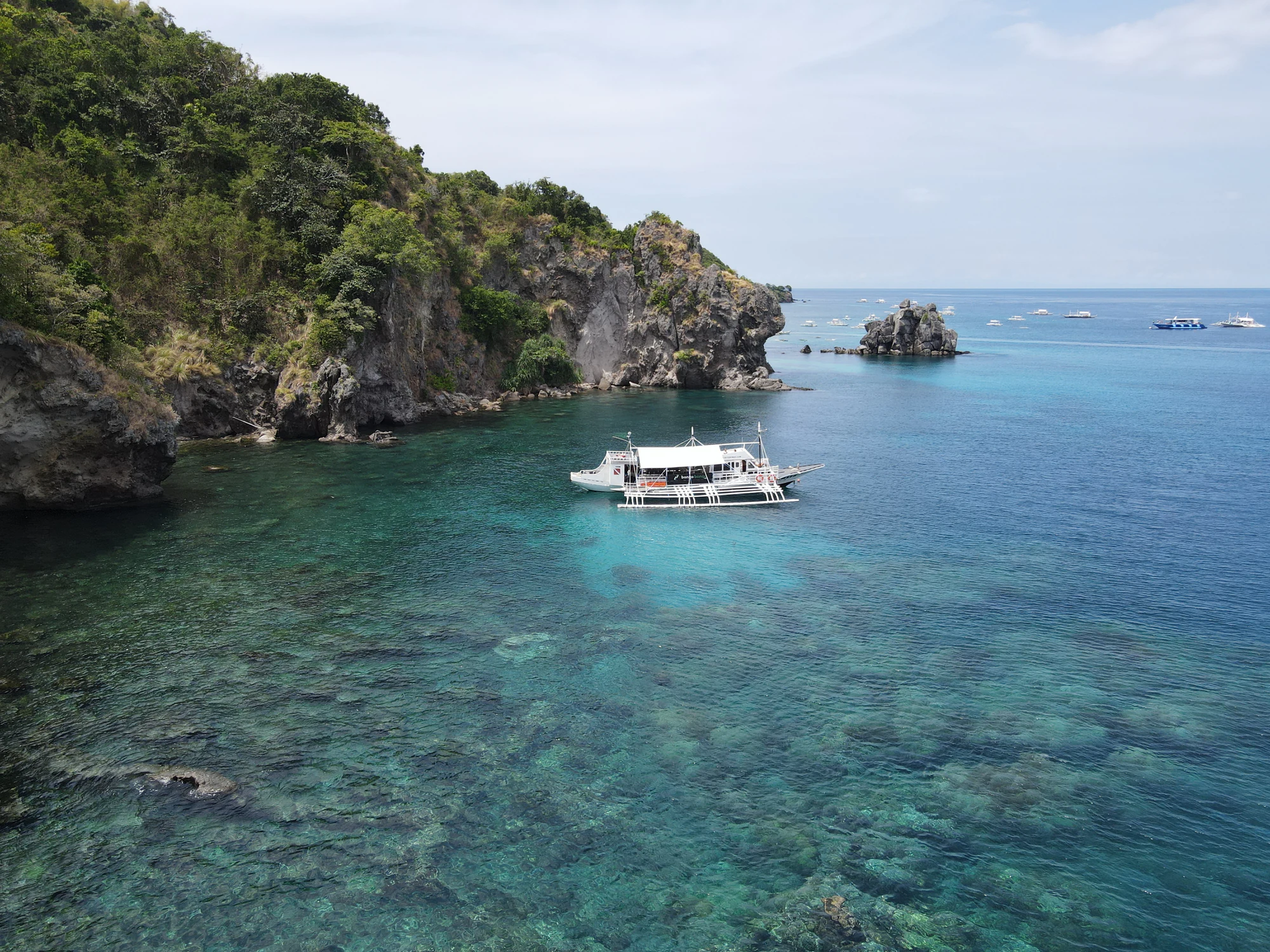
Dumaguete, Dauin and Apo Island
One destination, three names
Dumaguete is the city, Dauin is the coast, Apo Island is the reef. Divers use all three names for the same trip, and every dive resort that advertises Dumaguete diving is in Dauin or its neighbour Zamboanguita. The city itself has no dive sites.
- Dumaguete is the capital of Negros Oriental, a university city of around 135,000 people on the south-east coast of Negros Island in the central Philippines. It has the ferry port, Silliman University, the seafront boulevard and the hospitals. It is called the City of Gentle People, and after a week here you will see why. Even the airport is not quite in the city: Dumaguete Airport (DGT) sits in Sibulan, the next town north, ten minutes from the centre.
- Dauin is a 25-minute drive south of the city: a fishing and farming municipality of about 31,000 people, founded in 1908, with a shoreline of dark volcanic sand and a string of community-run marine sanctuaries. This is where the famous Dumaguete muck diving happens, from the shore, several times a day.
- Apo Island is a 72-hectare volcanic island seven kilometres off the coast, reached by boat in 30 to 45 minutes. It is a barangay of Dauin, home to around 900 people, and it is ringed entirely by coral reef. Dauin gives you the critters; Apo gives you the reefs and the turtles. Together they are what people mean by diving in Dumaguete.
We are on J. Basa Street in Dauin, 50 metres from the town's main marine sanctuary, with the dive centre, rooms and restaurant in one place. Read our guide to Dauin for how the town works day to day.
The grandchild of the mountain
Why the island is called Apo
Apo means grandchild in Cebuano and Filipino. Stand on the beach in Dauin and you can see both the island and, some say, its grandparent.
Look inland from the beach and the ridge behind the coast is the Cuernos de Negros, the Horns of Negros. Its highest peak, Mount Talinis, rises to 1,862 metres about 20 kilometres from Dumaguete, and the Philippine Institute of Volcanology and Seismology lists it as a potentially active volcano. Look the other way and the island sits on the horizon, a small volcanic cone pushed up from the sea floor off the southern tip of Negros, on the edge of the Bohol Sea.
Ask anyone on this coast and they will tell you the island is the grandchild of the mountain. Geologically they are relatives: both belong to the Negros Volcanic Belt that runs down the island's spine. Whatever the origin of the name, that volcanic past is why the diving is what it is. Apo's slopes fall away steeply into deep water, which is what brings the current, the schooling jacks and the healthy coral. Dauin's sand is volcanic too, fine and dark, and that is what makes it such good ground for the animals that hide in it.
Nine sites ring the island. Chapel, Largahan and Katipanan suit every certified diver; Rock Point, Coconut Point and Mamsa Point are for divers happy in current. Our Apo Island diving guide describes each one.
Community conservation since 1982
The sanctuary that started a movement
Apo Island is where the Philippines learned that a village can protect its own reef, and Dauin's coast followed its example.
In 1979, Dr Angel Alcala of the Silliman University Marine Laboratory in Dumaguete began talking to Apo's fishermen about setting aside part of their reef. It took three years. In 1982 the community chose a stretch of 450 metres of shoreline on the south-east side, extending 500 metres out to sea, and closed it to fishing. Fish stocks recovered, catches outside the closed area improved, and the Apo model became the template for hundreds of community marine sanctuaries across the Philippines. The island's waters are now protected under the national protected-areas law and managed by a board that includes the islanders themselves.
The original sanctuary was badly damaged by typhoons in 2011 and 2012 and has been closed to divers while it recovers. The rest of the island's reef is open, and in practice it is the better diving.
Dauin followed Apo's lead. The municipality now has ten community-managed marine sanctuaries, nine along the mainland coast and one around the island, each looked after by a local fishers' association that shares in the sanctuary fees. A survey led by our science officer, Bart Hazes of Biodives, has recorded more than 825 coastal fish species along this coast, including two new to science. Read how Dauin protects its reefs.
Two underwater worlds
What you will see
Macro on the sand in Dauin, wide-angle on the reefs at Apo, and the water is 25 to 29 °C all year.
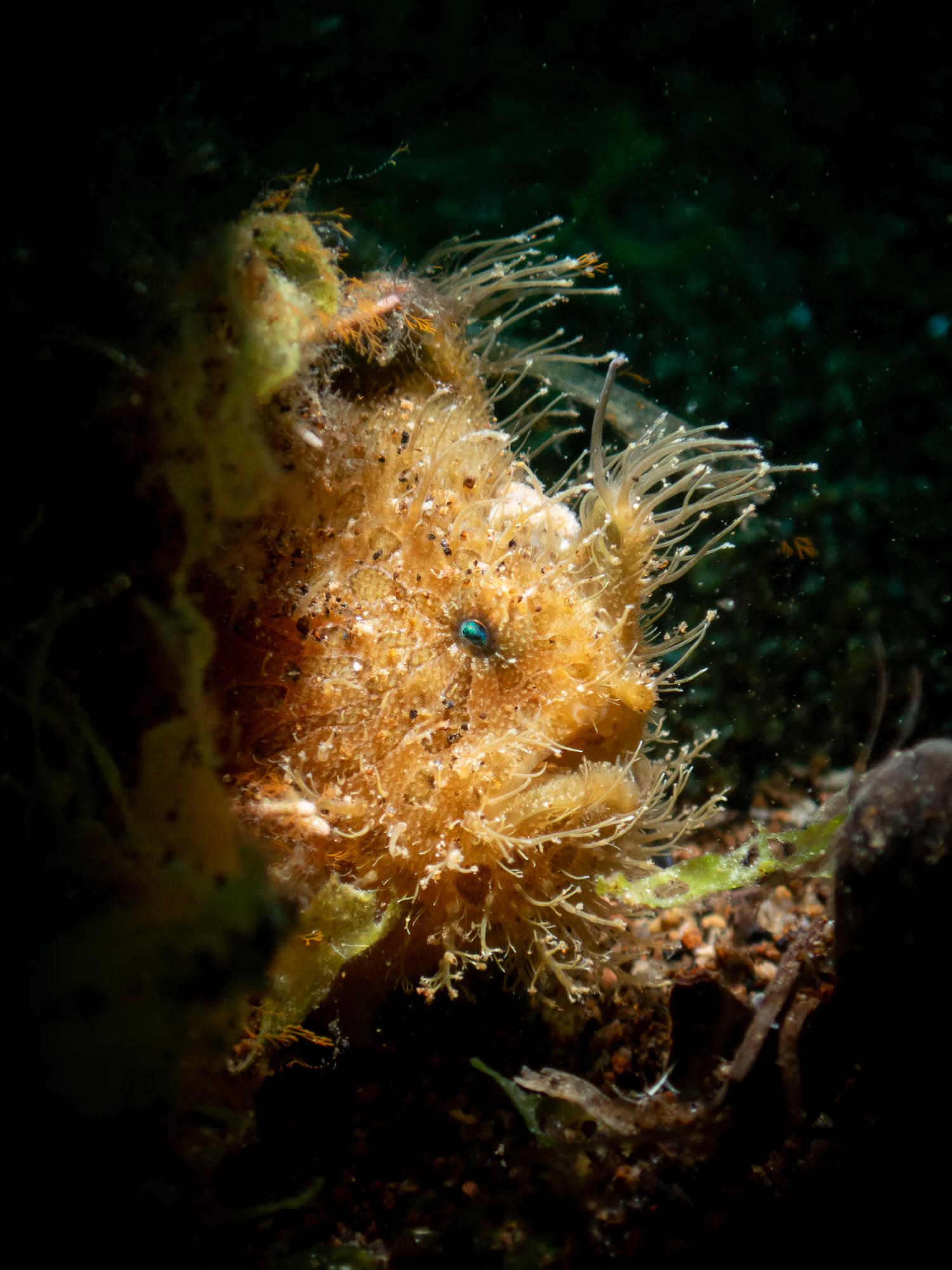
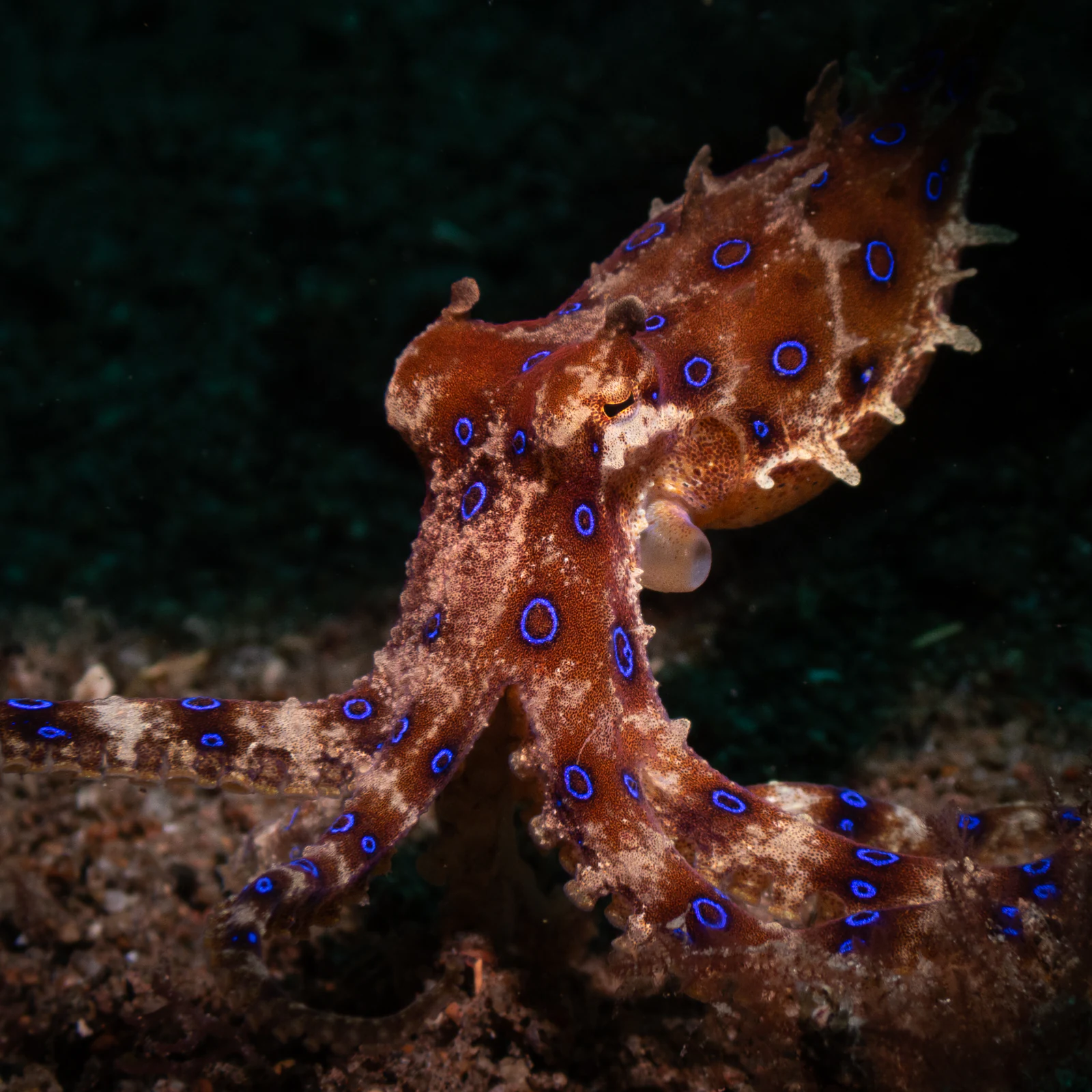
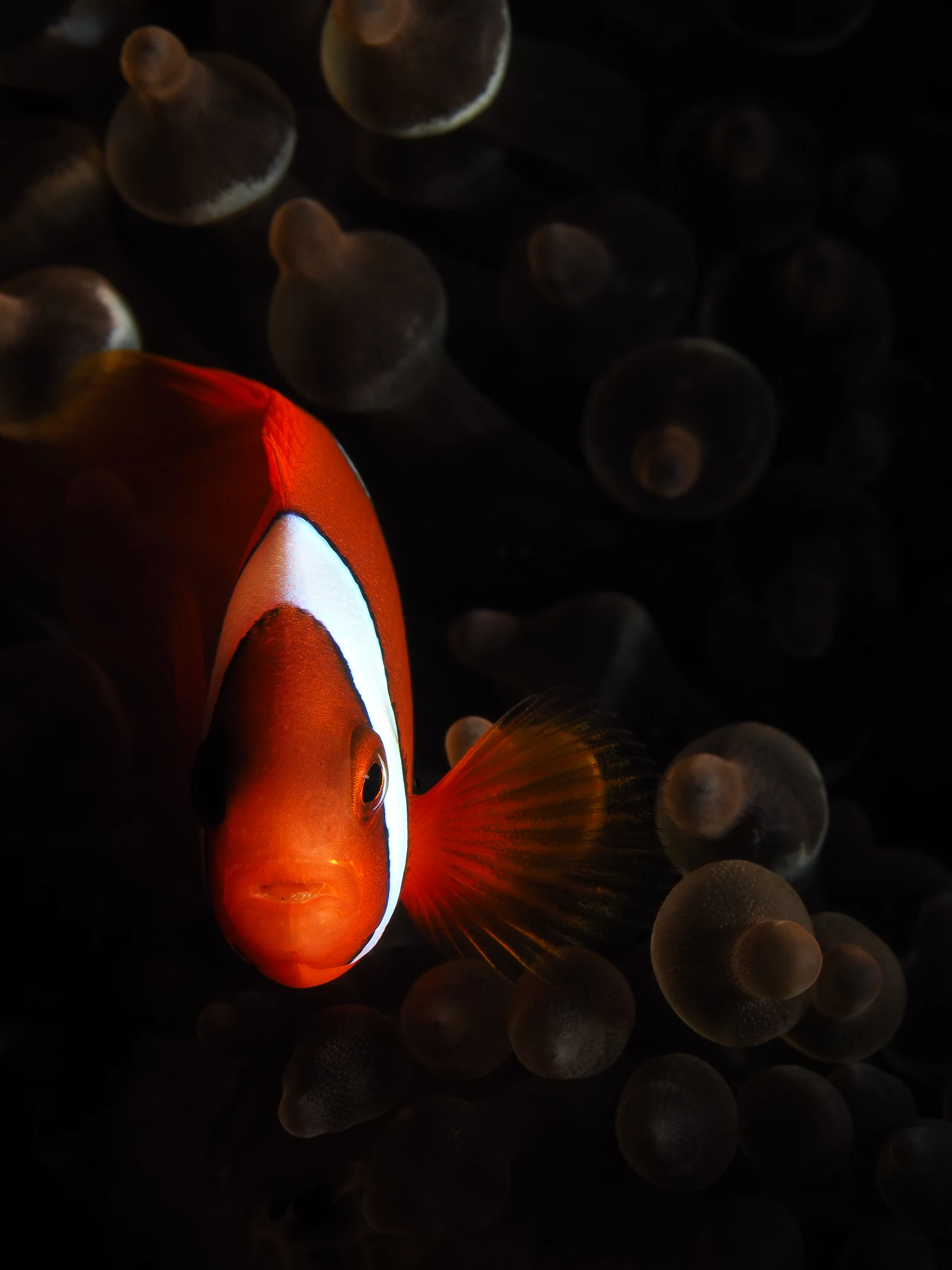
- Dauin, from the shore. Frogfish in every size and colour, with the smallest from February to May; six kinds of octopus including blue-ringed, mimic and wonderpus, best from October to February; flamboyant cuttlefish, ghost pipefish, seahorses, mantis shrimps and more nudibranchs than you can name. Shore dives leave at 7:00, 9:00, 12:00 and 2:30, with a night dive every evening.
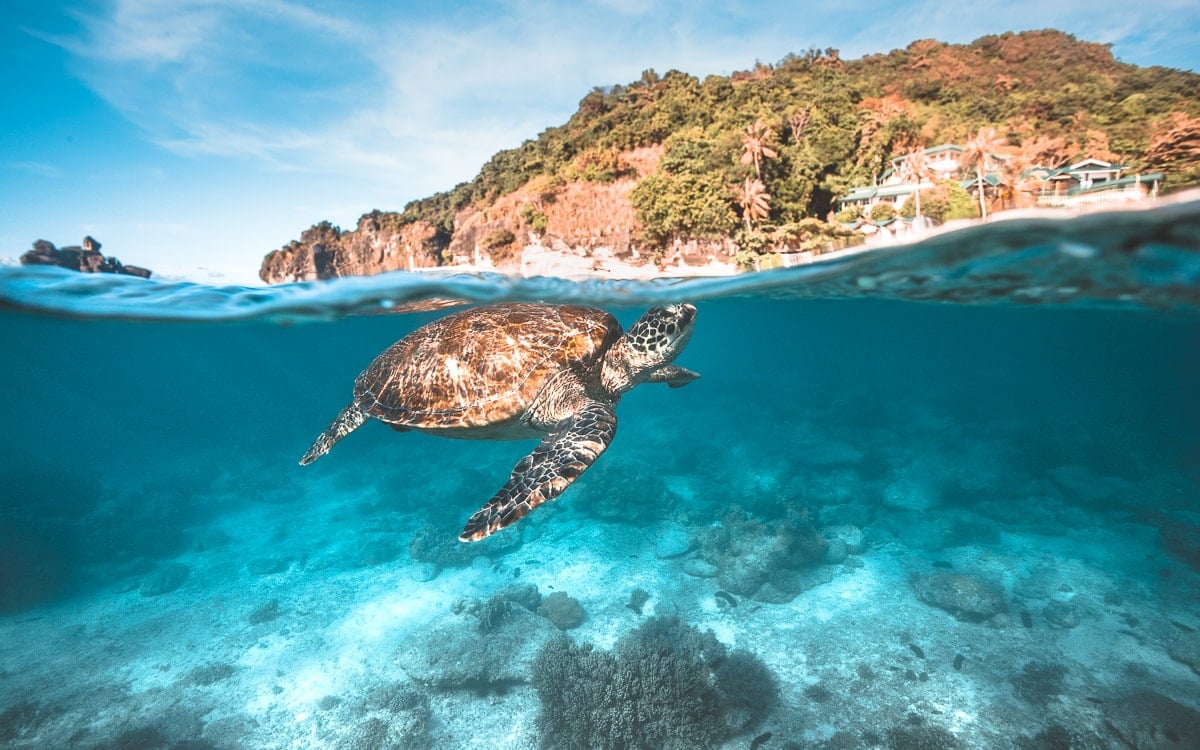
- Apo Island, by boat. Green and hawksbill turtles in the shallows, sea kraits, schooling jacks at Mamsa and Coconut Point when the current runs, walls and soft coral at Rock Point and Kan-uran, and healthy hard coral almost everywhere. Visibility is usually 10 to 30 metres.
- All year round. Diving runs every month. The quietest, calmest months for Apo are April to November; the critter season on the sand peaks from October to May. Month-by-month detail is on our when-to-dive page.
Getting here
How to get to the diving from Dumaguete
Fly or sail into Dumaguete, then about 45 minutes by road to Dauin. Every Apo Island boat leaves from this coast.
- By air. Dumaguete Airport (DGT) is in Sibulan, just north of the city, a little over an hour from Manila and under an hour from Cebu. From the terminal it is about 45 minutes by car through Dumaguete to Dauin. We arrange a private transfer for PHP 1,200 each way, or a tricycle and jeepney will do it for a few hundred pesos and well over an hour.
- By sea. From Cebu, fast ferries cross from Liloan to Sibulan in about 20 minutes, and larger ferries sail from Cebu City to Dumaguete overnight. Ferries from Siquijor and from Tagbilaran on Bohol land in Dumaguete port. A private van from Sibulan port is PHP 1,500 each way.
- To Apo Island. Dive boats leave from the Dauin and Zamboanguita coast, not from the city. If you stay in Dauin there is no early start through Dumaguete and no need to sleep on the island.
Routes, times and what to tell us before you land are on our getting-to-Dauin page.
City or coast
Where to stay: Dumaguete or Dauin?
If you are here to dive, stay in Dauin. If someone in the group is not diving, the city has its uses.
Dive resorts in Dauin run shore dives from the beach in front of you and Apo Island trips from the same spot. Staying in the city means a 25-minute drive before every dive and another one after. Dumaguete makes sense for a night at either end of the trip, for the restaurants along Rizal Boulevard, or if a partner wants a town around them while you are underwater.
At Bongo Bongo we are 50 metres from Dauin's main marine sanctuary, with rooms from a PHP 500 dorm bed to air-conditioned Deluxe Double and Twin rooms, a restaurant and our own home-roasted coffee on site. Our guests rate us 4.8 out of 5 across more than 750 reviews on Google and Tripadvisor. See the rooms and rates.
Prices and planning
Diving Dumaguete with Bongo Bongo
Shore dives, Apo Island days and PADI courses from one base in Dauin, at direct prices.
- Dauin shore dives are PHP 1,750 each with full equipment, or PHP 1,600 with your own gear, including the sanctuary fee. Night dives are PHP 2,150 with a torch. From 10 dives we take 10% off the diving, and from 20 dives 15%.
- Apo Island day trips are PHP 5,900 with equipment for three reef dives, lunch, drinks and sanctuary fees, plus a temporary fuel surcharge of PHP 600.
- Learning to dive here costs PHP 22,500 for the PADI Open Water Diver course, taught from our pool and a calm house reef with no boat timetable to work around. See all PADI courses.
- Standards. We are a PADI 5 Star Career Development Center, a PADI Eco Center and a Green Fins member, and Dauin has its own hyperbaric chamber.
Questions about diving in Dumaguete
Is Dumaguete good for diving?
Yes, provided you understand that the diving is in Dauin and at Apo Island, 25 minutes and a boat ride south of the city. For macro and muck diving it is among the best places in Asia; for reefs and turtles, Apo Island is one of the Philippines' best-known sites.
Can you dive Apo Island from Dumaguete in a day?
Yes. Day trips leave from the Dauin and Zamboanguita coast in the morning, make three dives with lunch on board, and are back by mid-afternoon. We meet at the dive centre at 7:45.
Where do I fly into for Dumaguete diving?
Dumaguete Airport, code DGT, which is in Sibulan just north of the city. From the terminal to Dauin is about 45 minutes by car; we can book a private transfer for PHP 1,200 each way.
Should I stay in Dumaguete or in Dauin?
Dauin, if diving is the point of the trip. The dive sites, the dive centres and the Apo Island boats are all here. Dumaguete works for a night at the start or end, or for a non-diving companion who wants a town.
What does Apo mean?
Grandchild, in Cebuano and Filipino. Along this coast the island is thought of as the grandchild of Mount Talinis and the Cuernos de Negros range behind Dauin, which belong to the same volcanic belt.
Sources: Philippine Statistics Authority census figures; Wikipedia entries for Dumaguete, Dauin, Apo Island and Mount Talinis; Philippine Institute of Volcanology and Seismology; Silliman University Marine Laboratory on the Apo Island sanctuary (1982); Biodives fish survey of the Dauin coast; our own dive logs. Prices are our direct rates as of October 2026 and are confirmed when you book.