
Diving in Dauin with Bongo Bongo
Dauin rewards a closer look. Explore its coastal dive sites with us, tell us about your experience and interests, and we’ll help you plan your time in the water.
What makes Dauin different
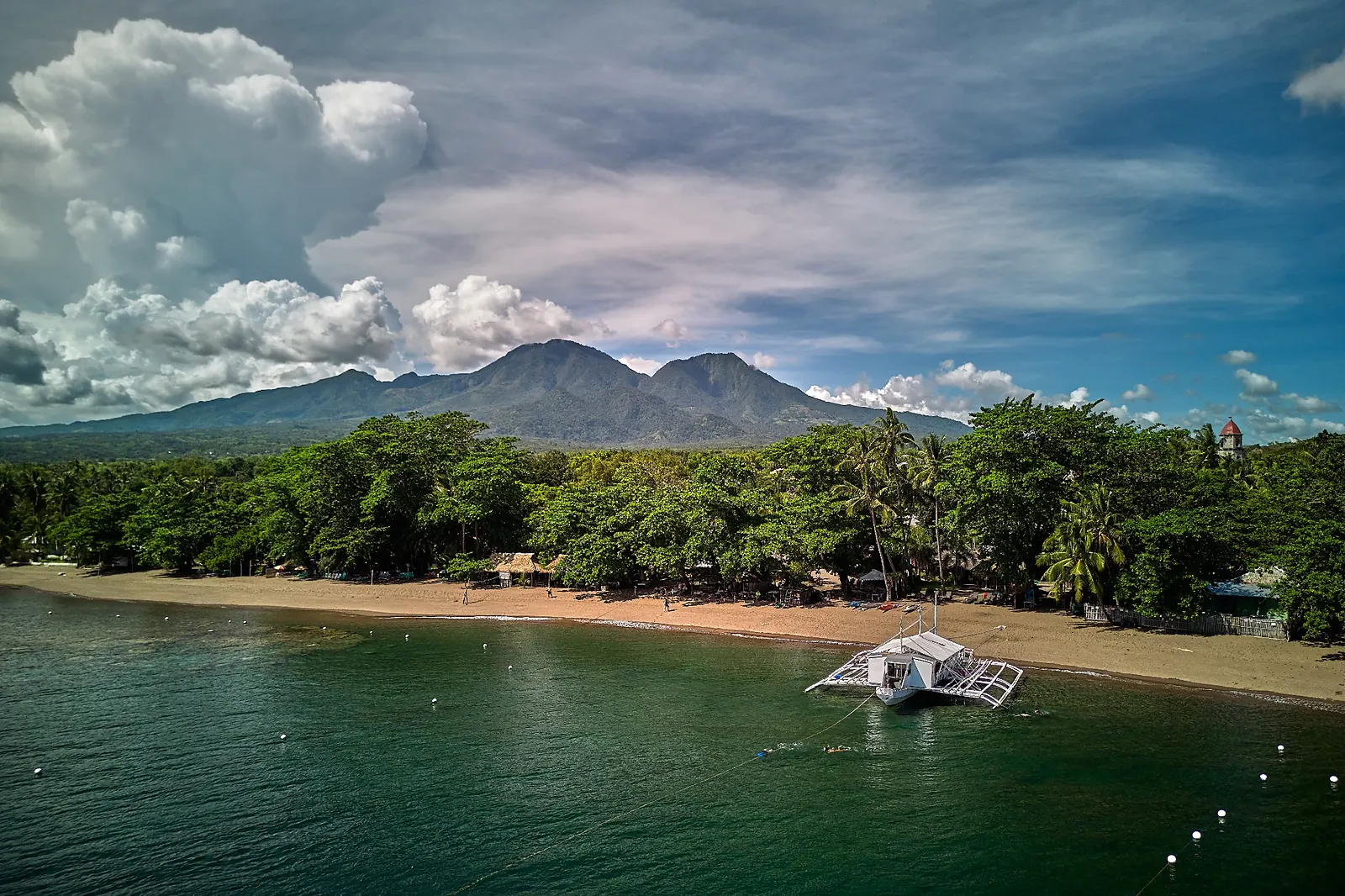
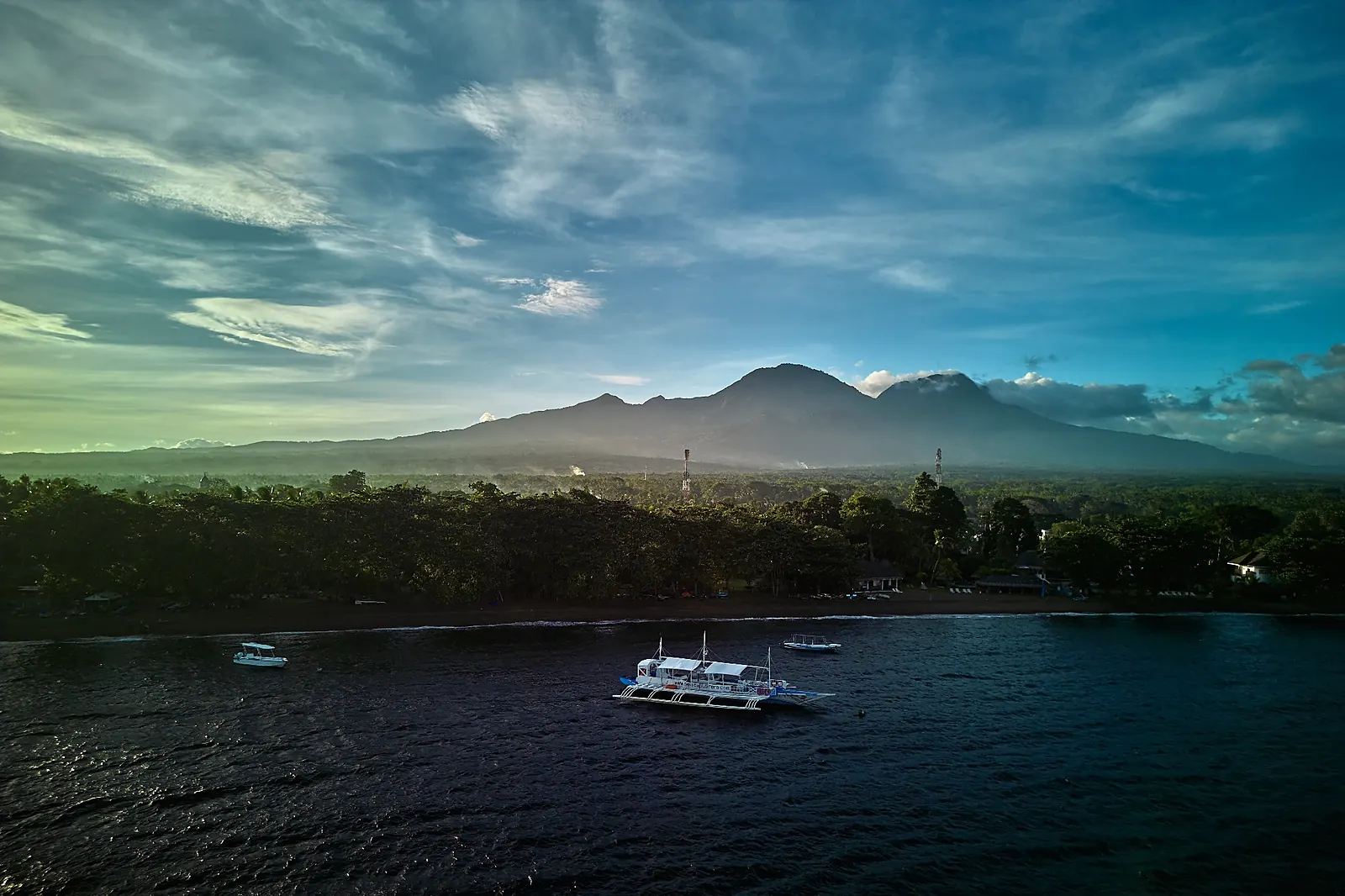
Many tropical dive destinations are known for coral walls and big reef scenes. Dauin is about the details. Its dark volcanic sand, marine sanctuaries and artificial reefs are home to a fascinating cast of small, strange and photogenic creatures, and many sites are reached straight from the beach.
New to the term “muck diving”? It simply means diving over sand and silt and looking closely for the animals that live there. It pairs well with the coral reefs of Apo Island.
Dauin is a good choice all year round, too. Unlike many dive areas in the Philippines, there are no big rivers flowing into the sea along our stretch of coast. So even after heavy rain there’s very little run-off, mud or silt, and the visibility on our dive sites usually stays good. Typhoons also reach this part of the Philippines much less often than the north of the country, and most of our year is calm. When a storm does come close, we follow PAGASA’s warnings closely and always put your safety first.
What you can see
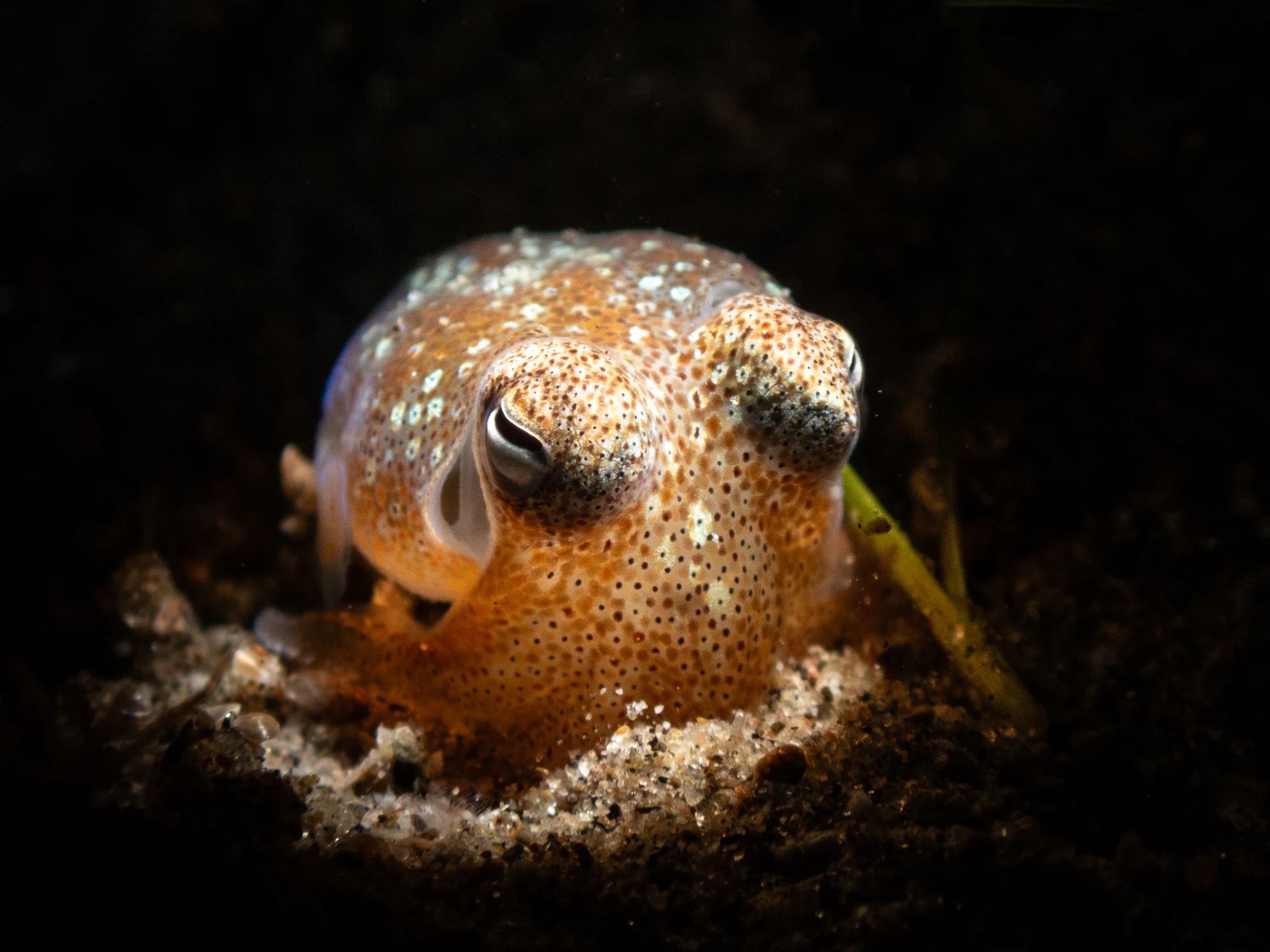
A few of the animals divers often look for on Dauin’s sand. What you see changes from dive to dive, and that’s part of the fun.
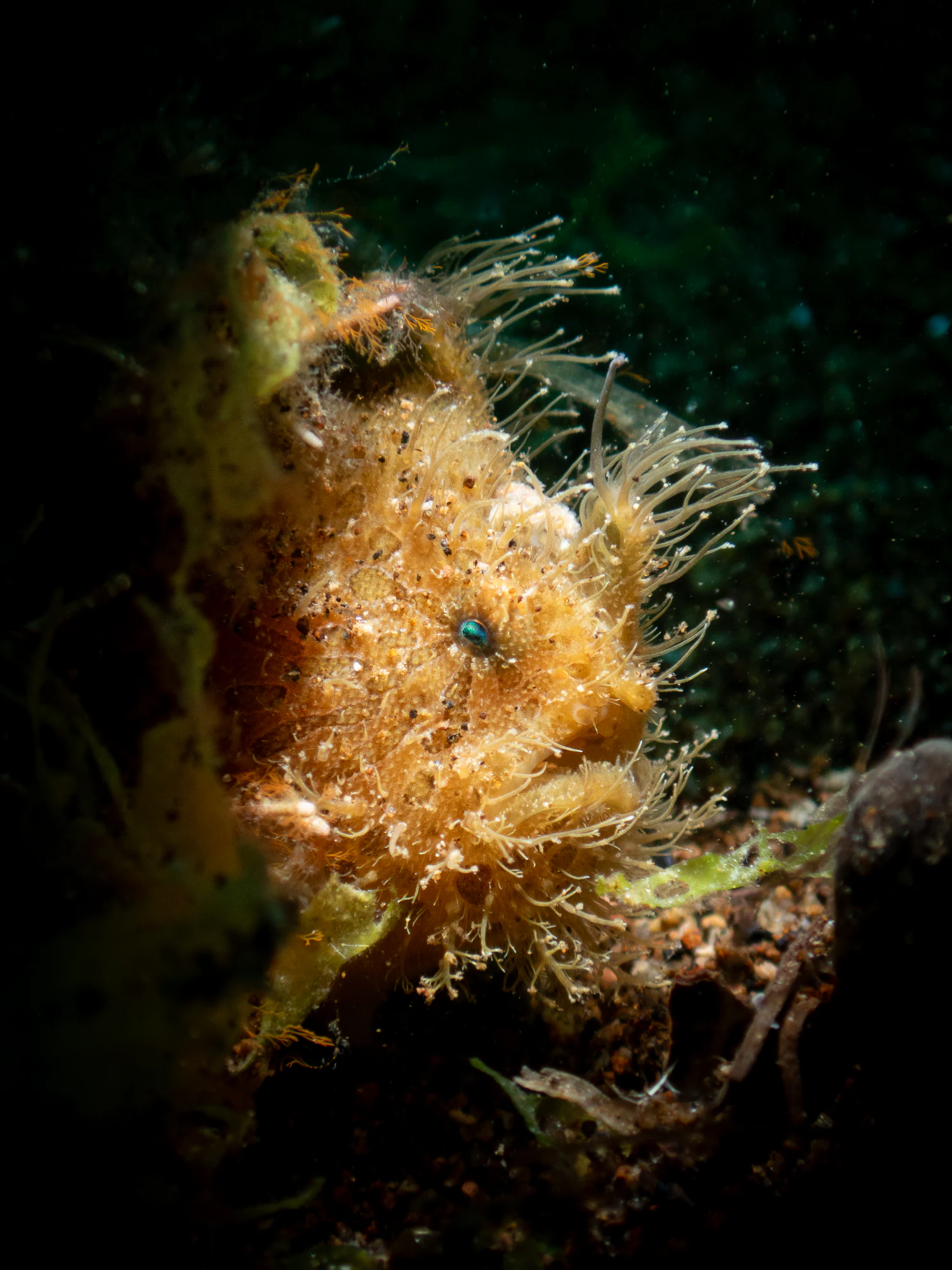
Frogfish
Masters of disguise, sitting motionless on sponges and debris. Hairy, painted, warty and giant frogfish all turn up here.
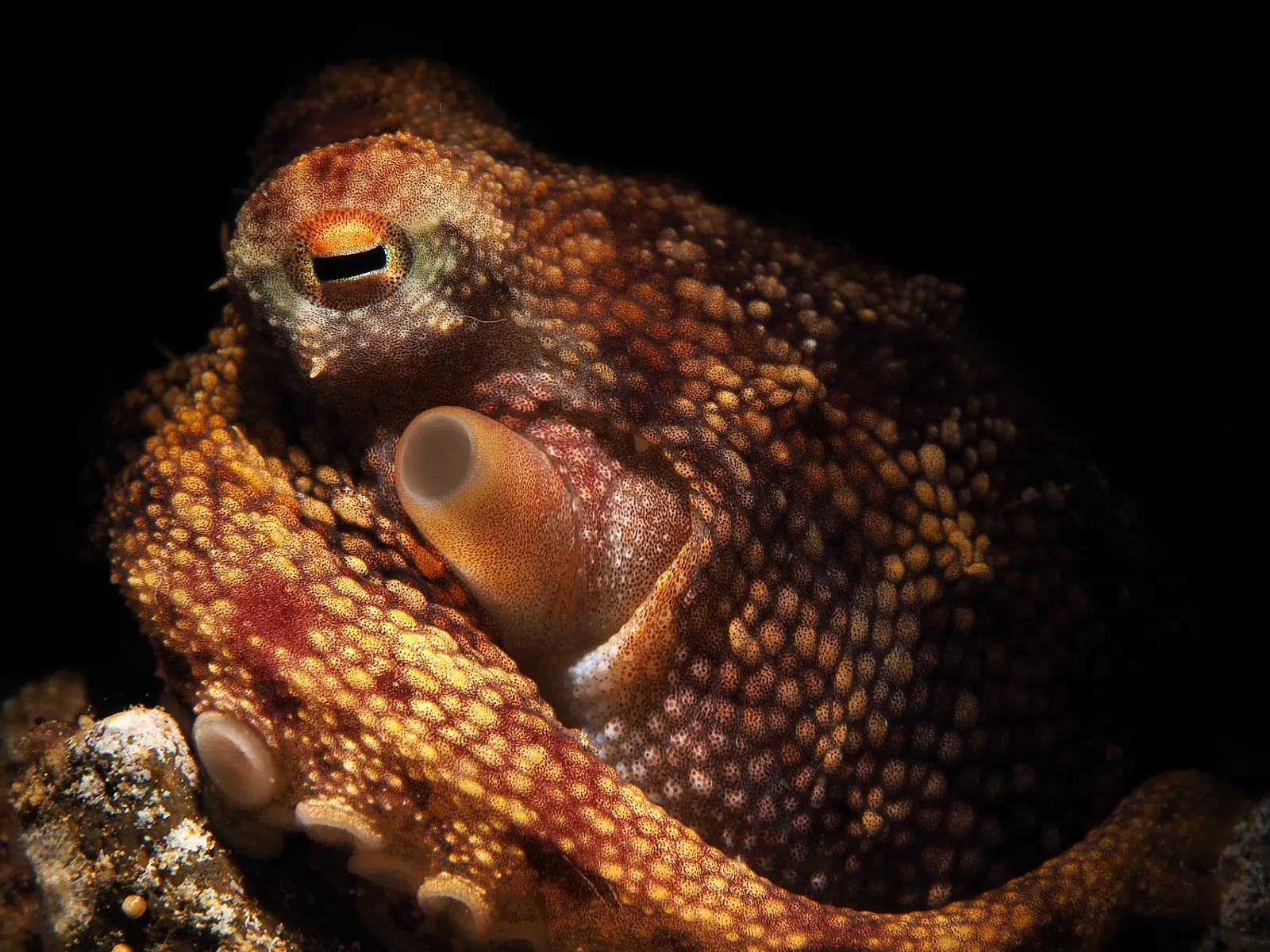
Octopus
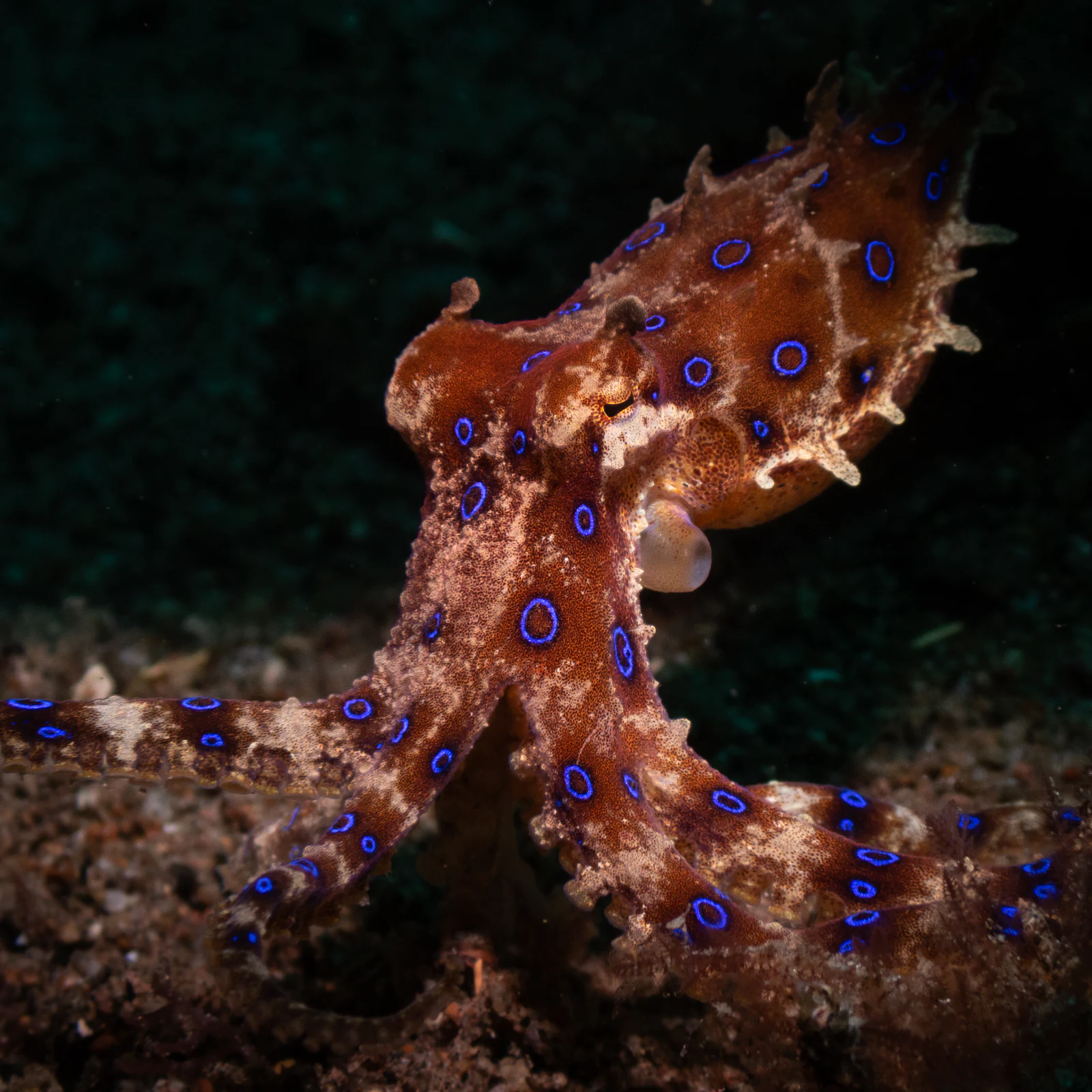
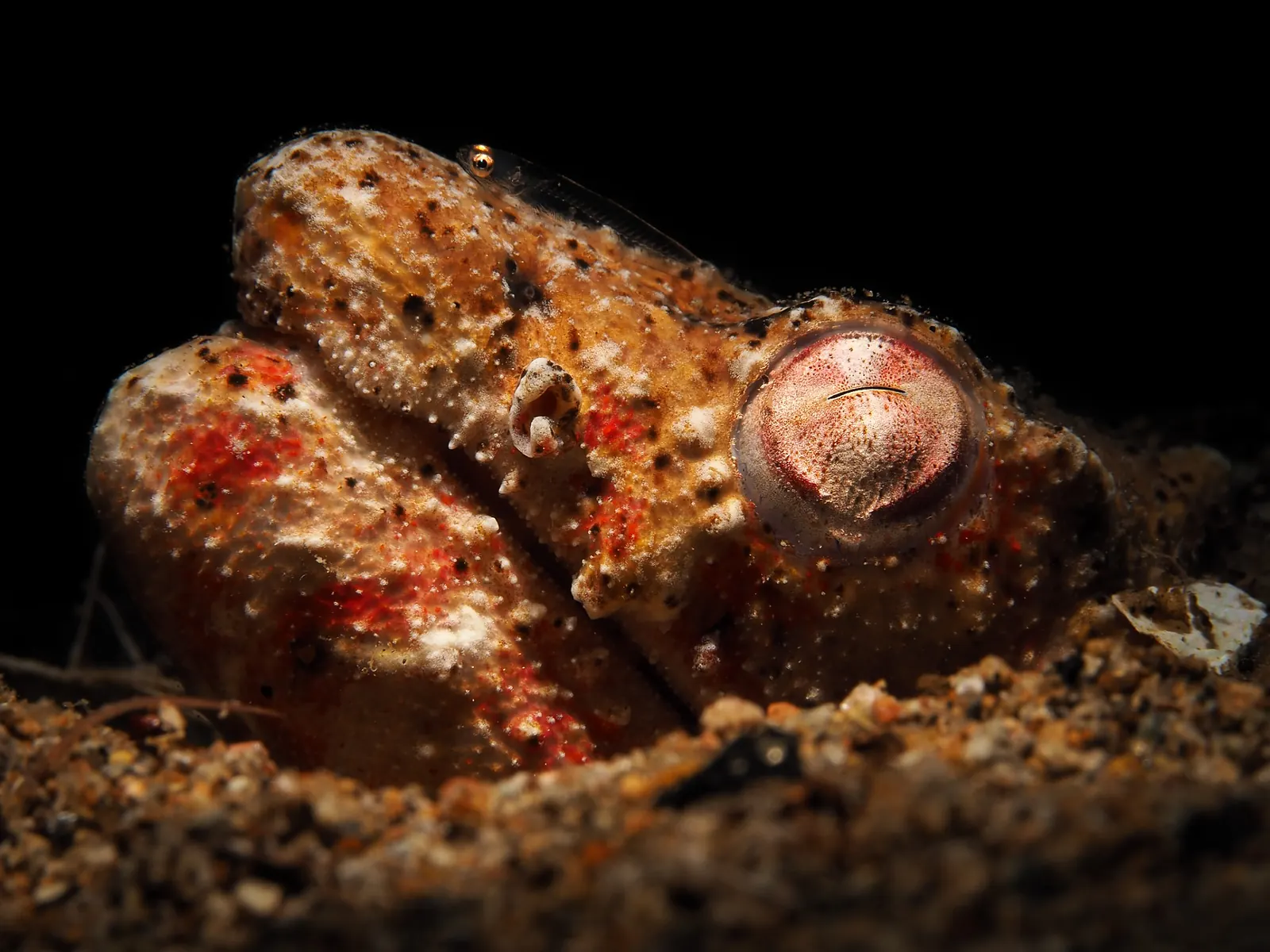
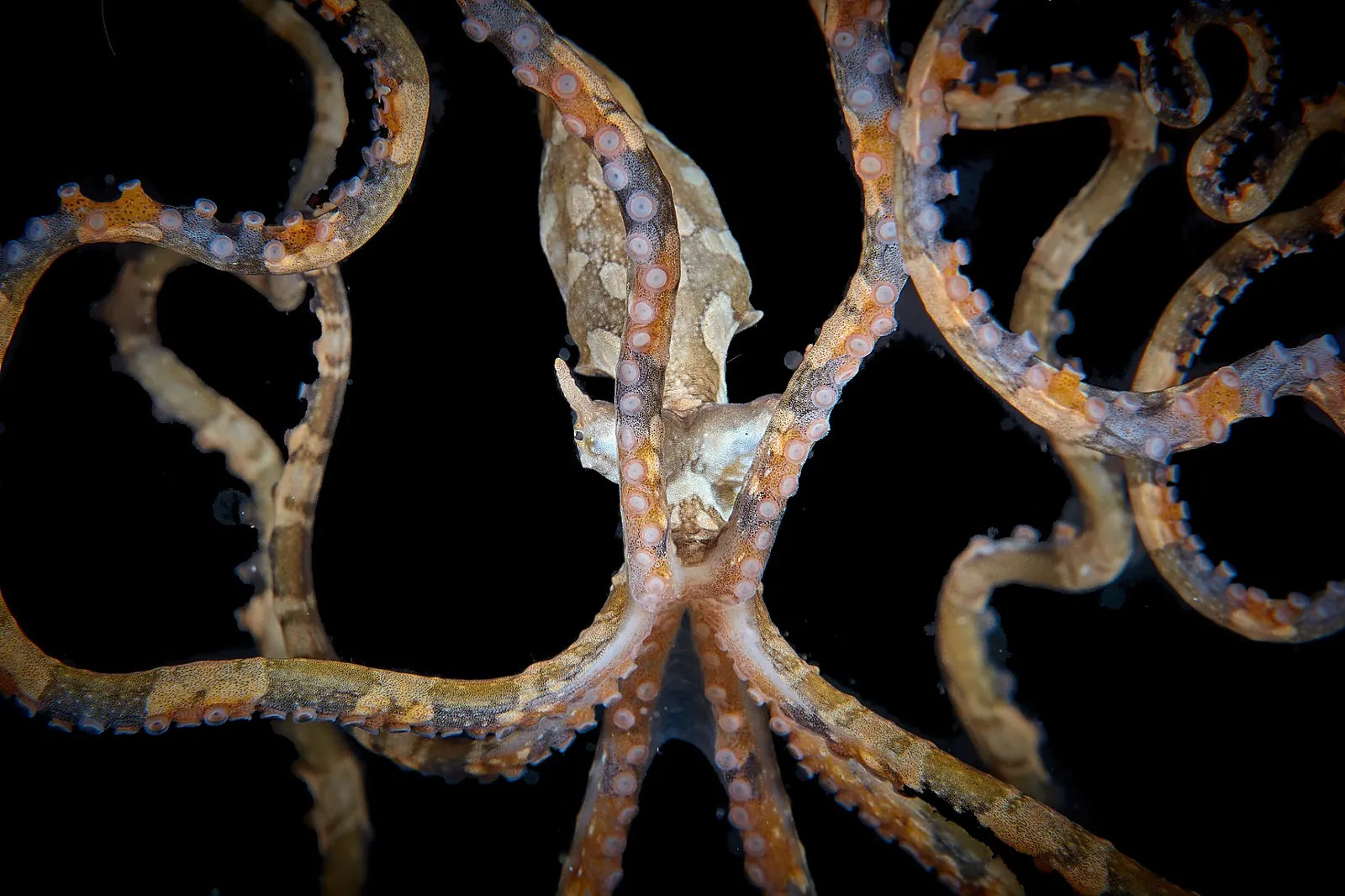
From coconut octopus to the elusive mimic, wonderpus and blue-ringed octopus.
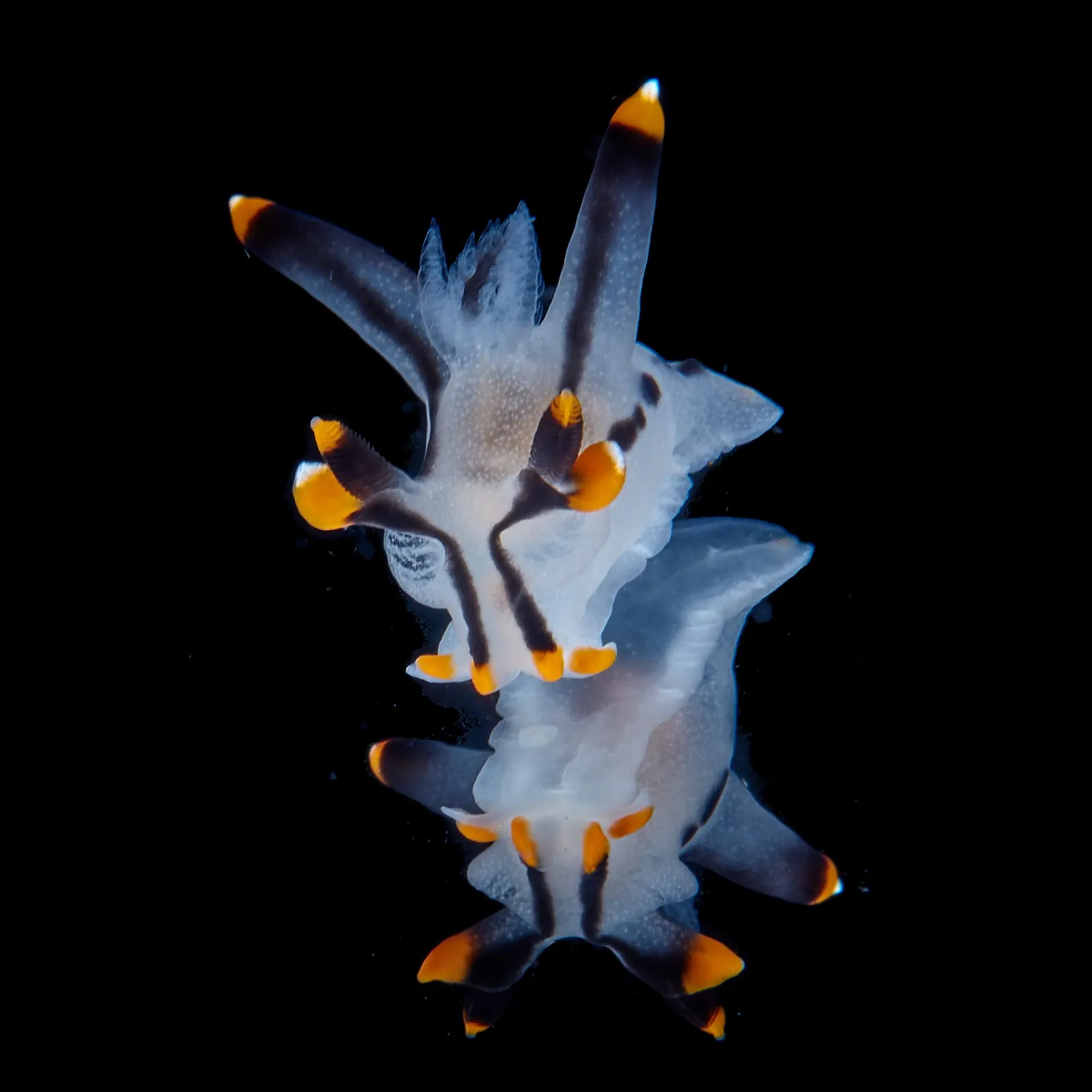
Nudibranchs
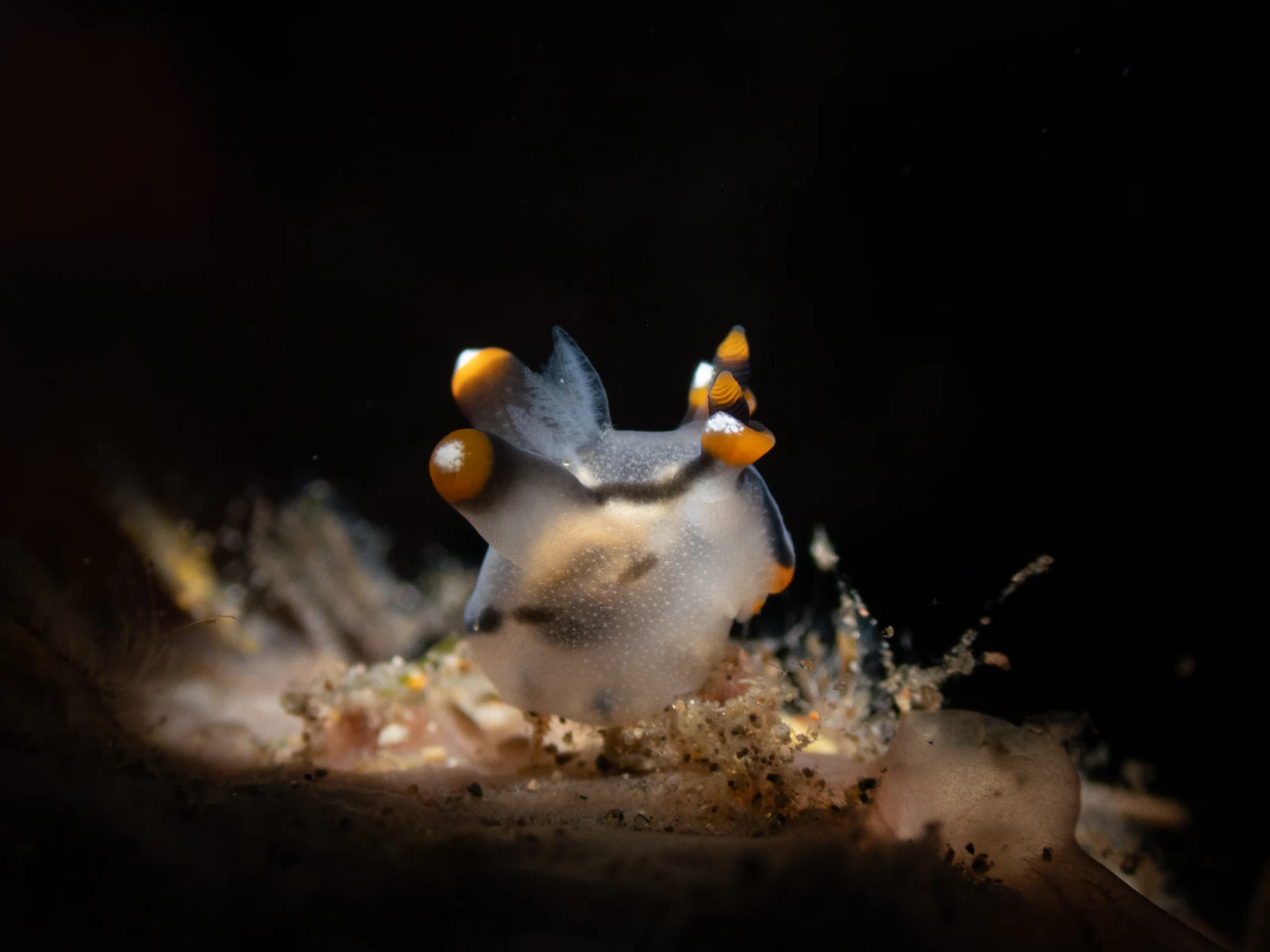
Colourful sea slugs in every shape and pattern, from Nembrotha to the tiny “Shaun the Sheep”.
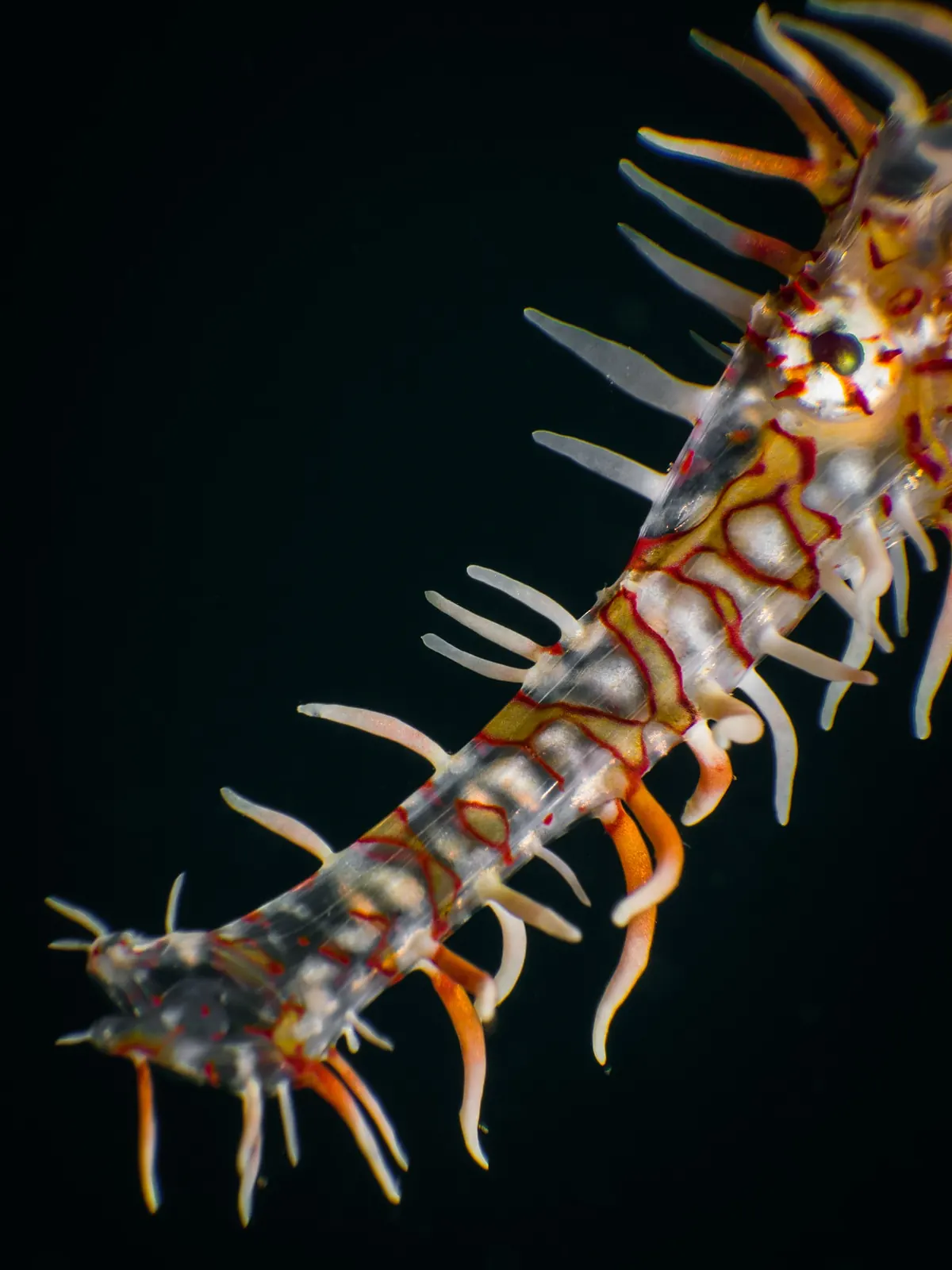
Ghost pipefish
Ornate and robust ghost pipefish: delicate relatives of the seahorse, hiding in plain sight.
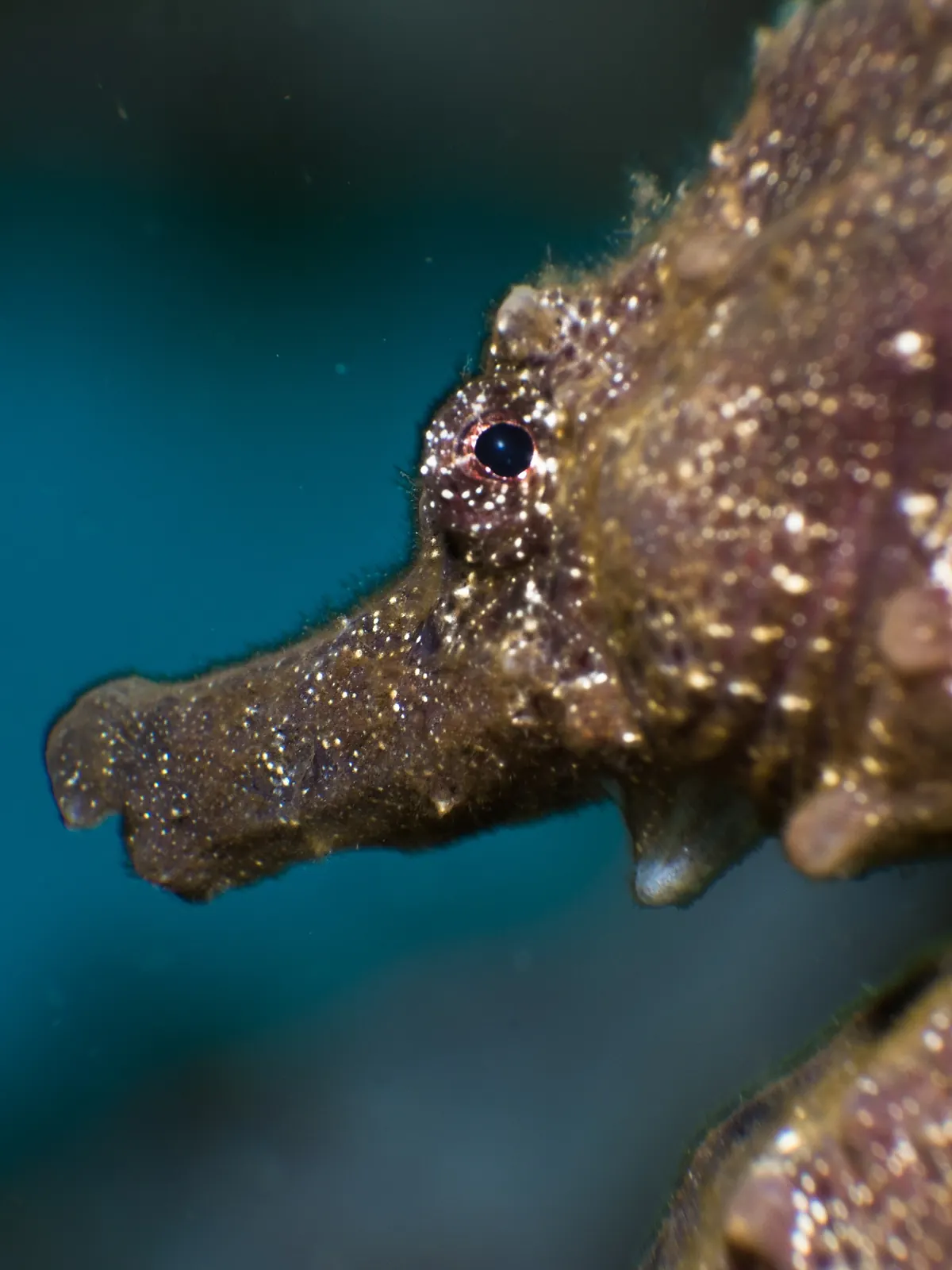
Seahorses
Look closely at the sand and debris: thorny seahorses live at sites such as Mike’s and Unity Point.
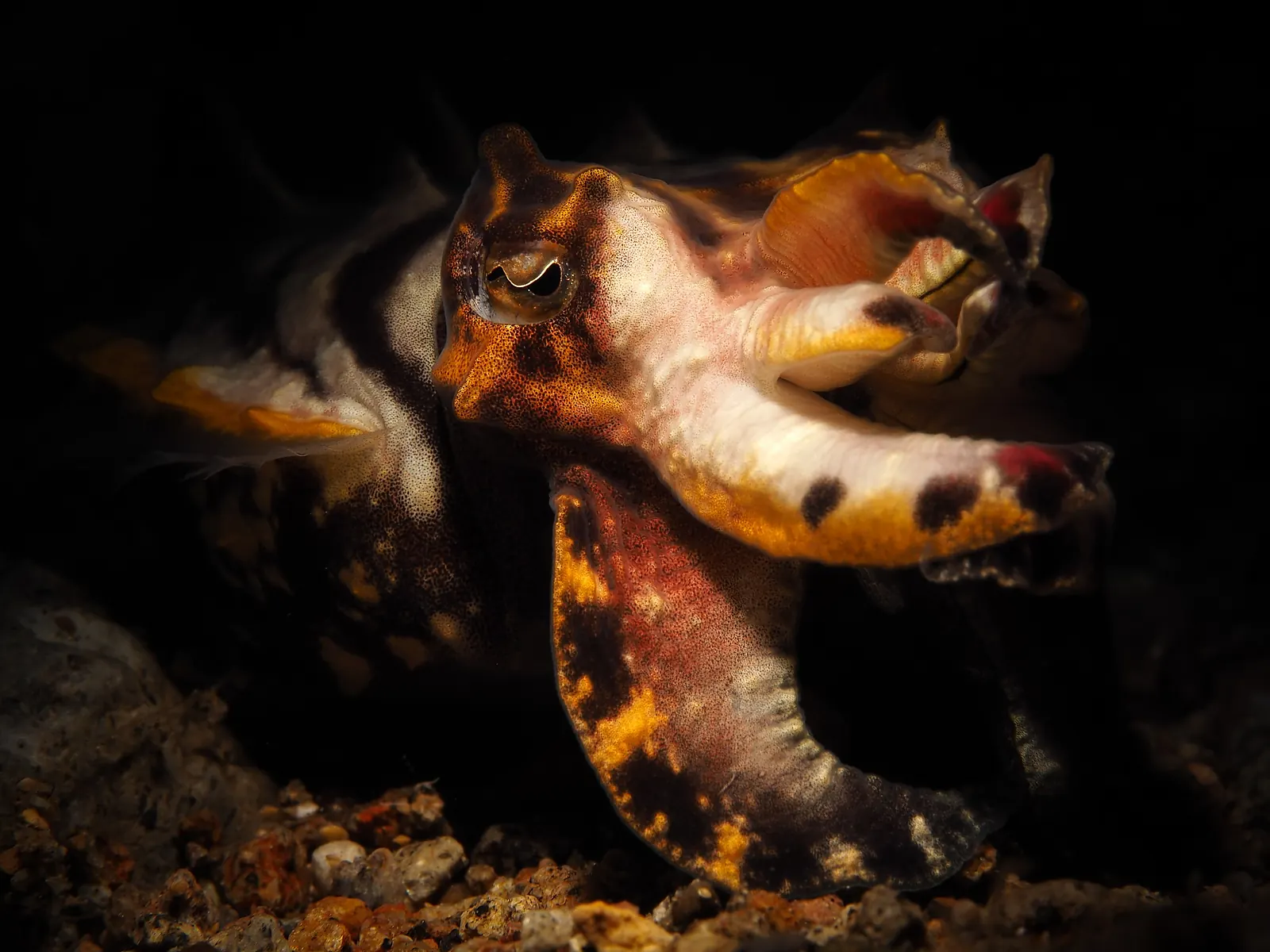
Flamboyant cuttlefish
Small, bold and colourful, it walks across the sand rather than swimming.
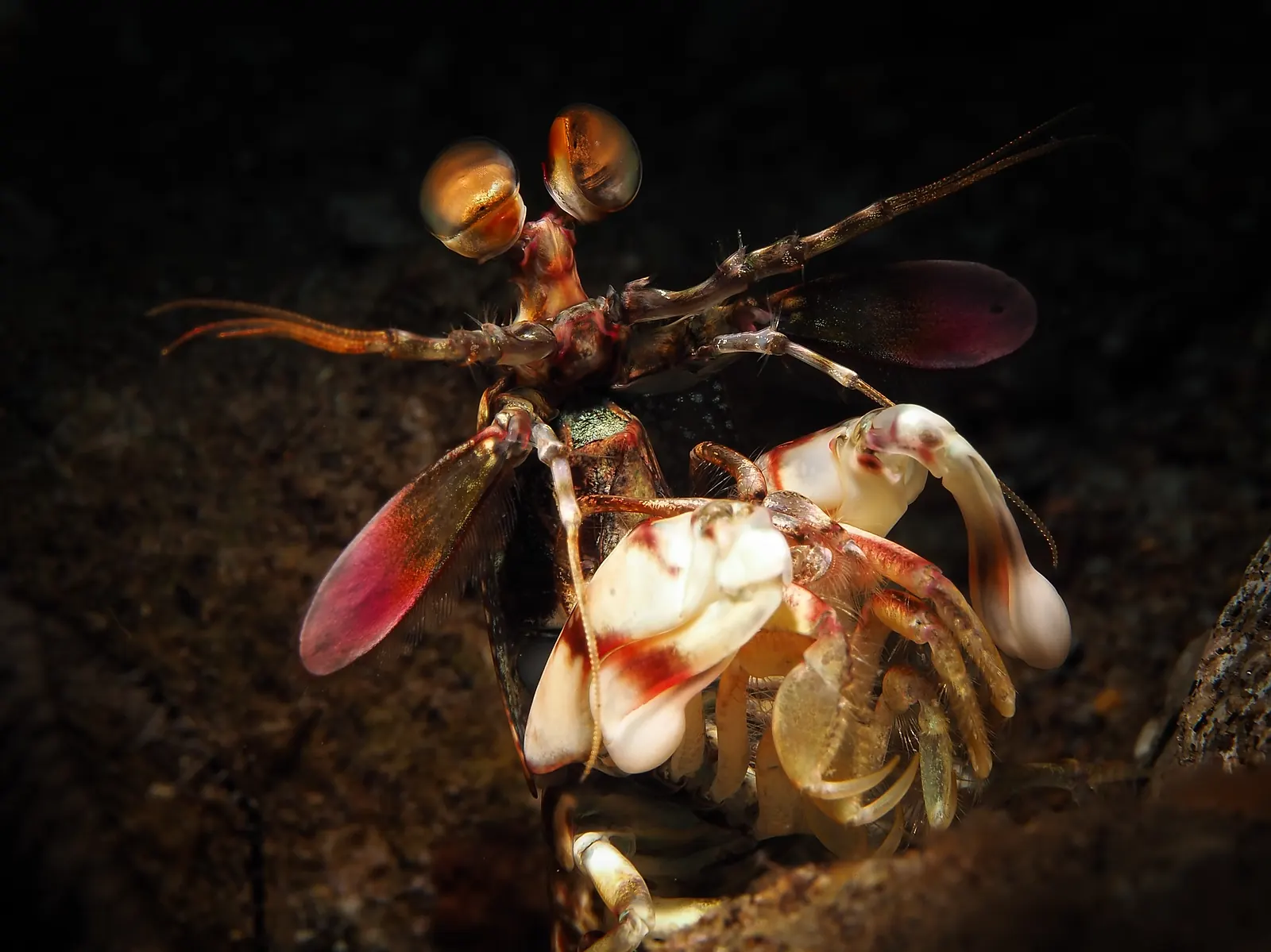
Mantis shrimps
Peacock mantis shrimps watch from their burrows, armed with one of the fastest strikes in the animal world.
Eels
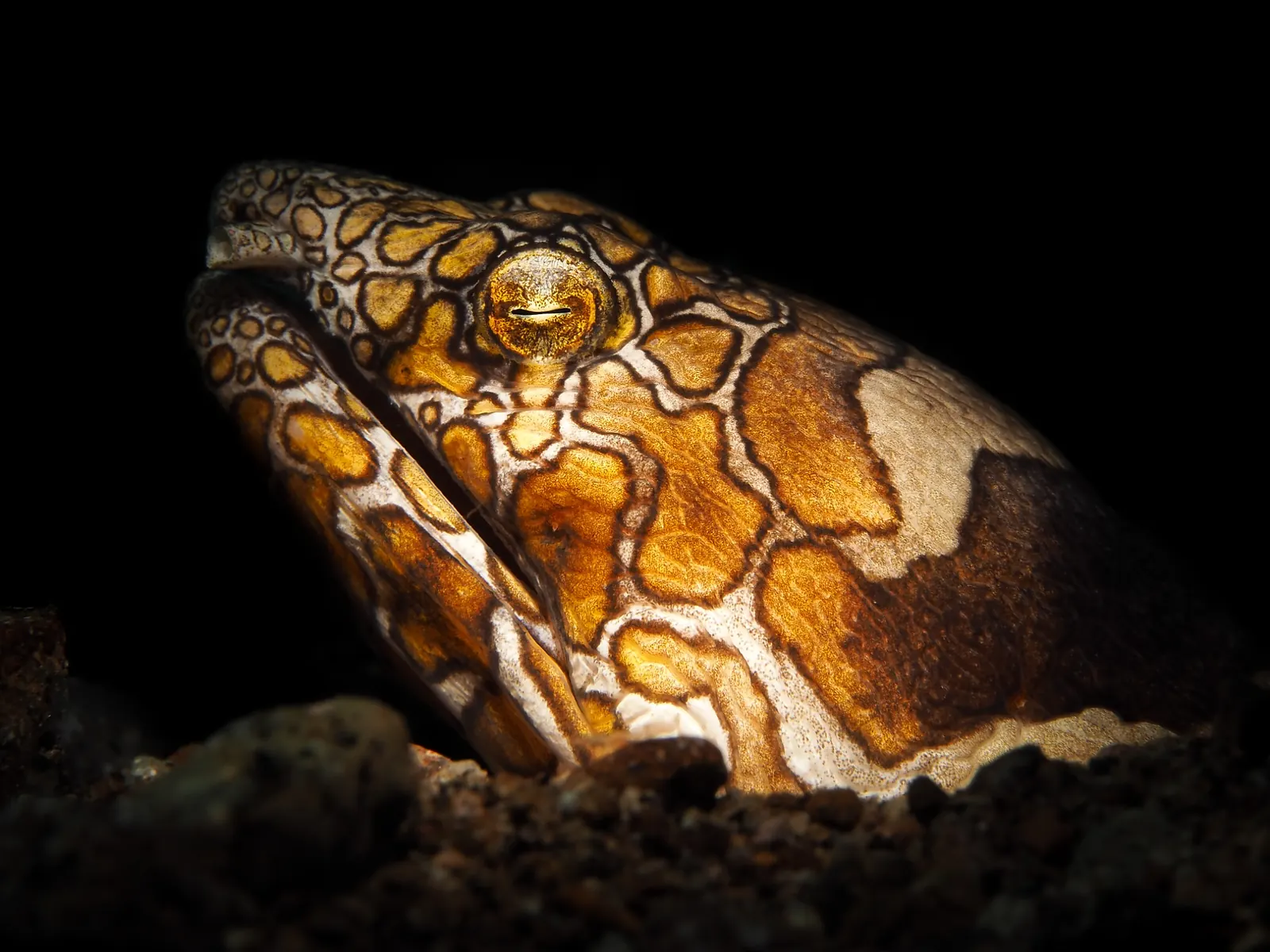
Moray eels peer out of the reefs, and snake eels poke their heads out of the sand.
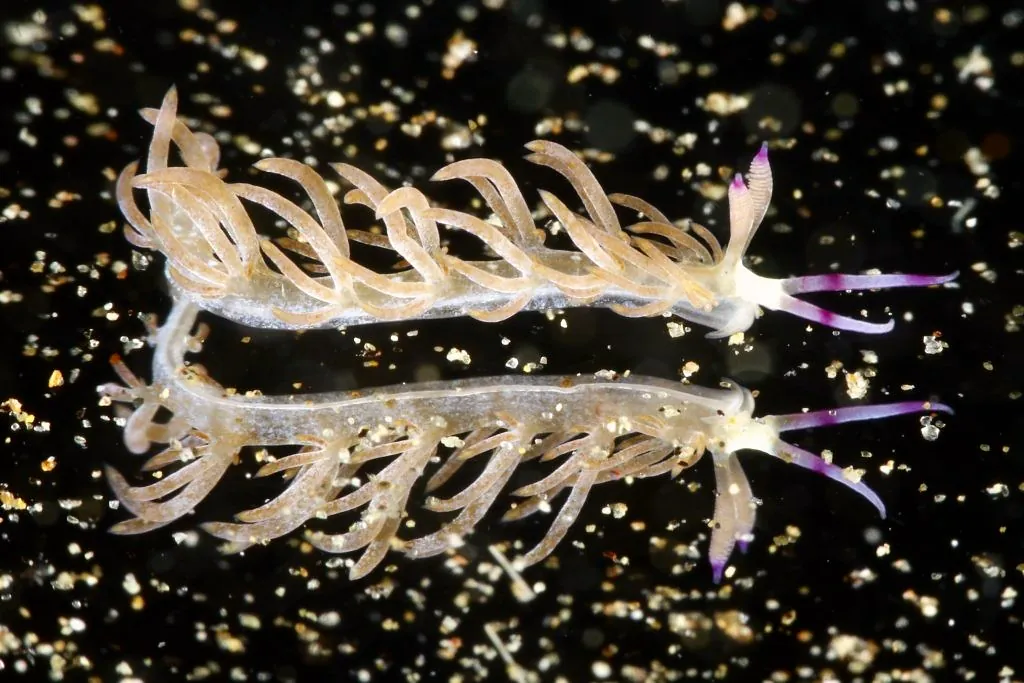
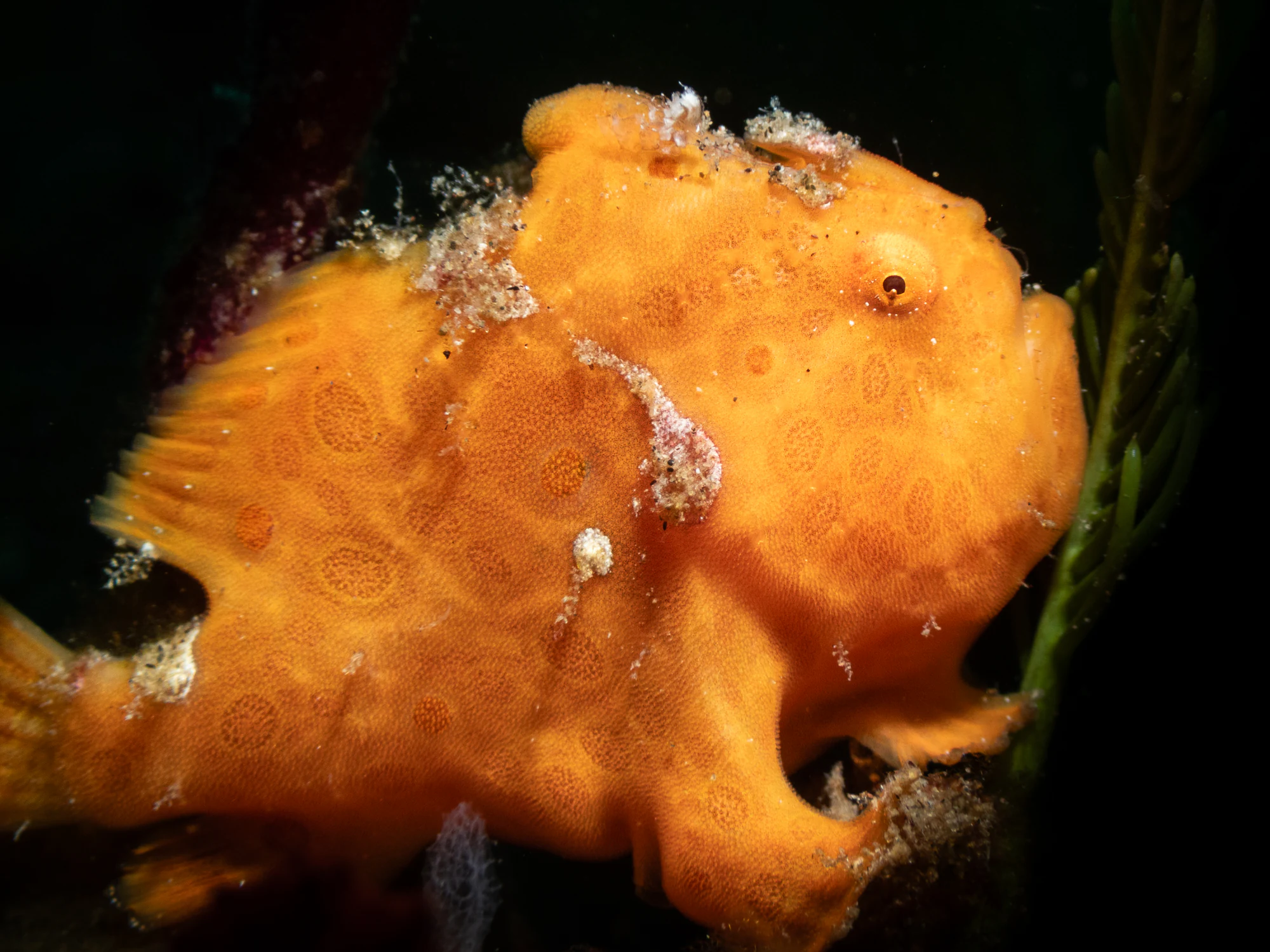
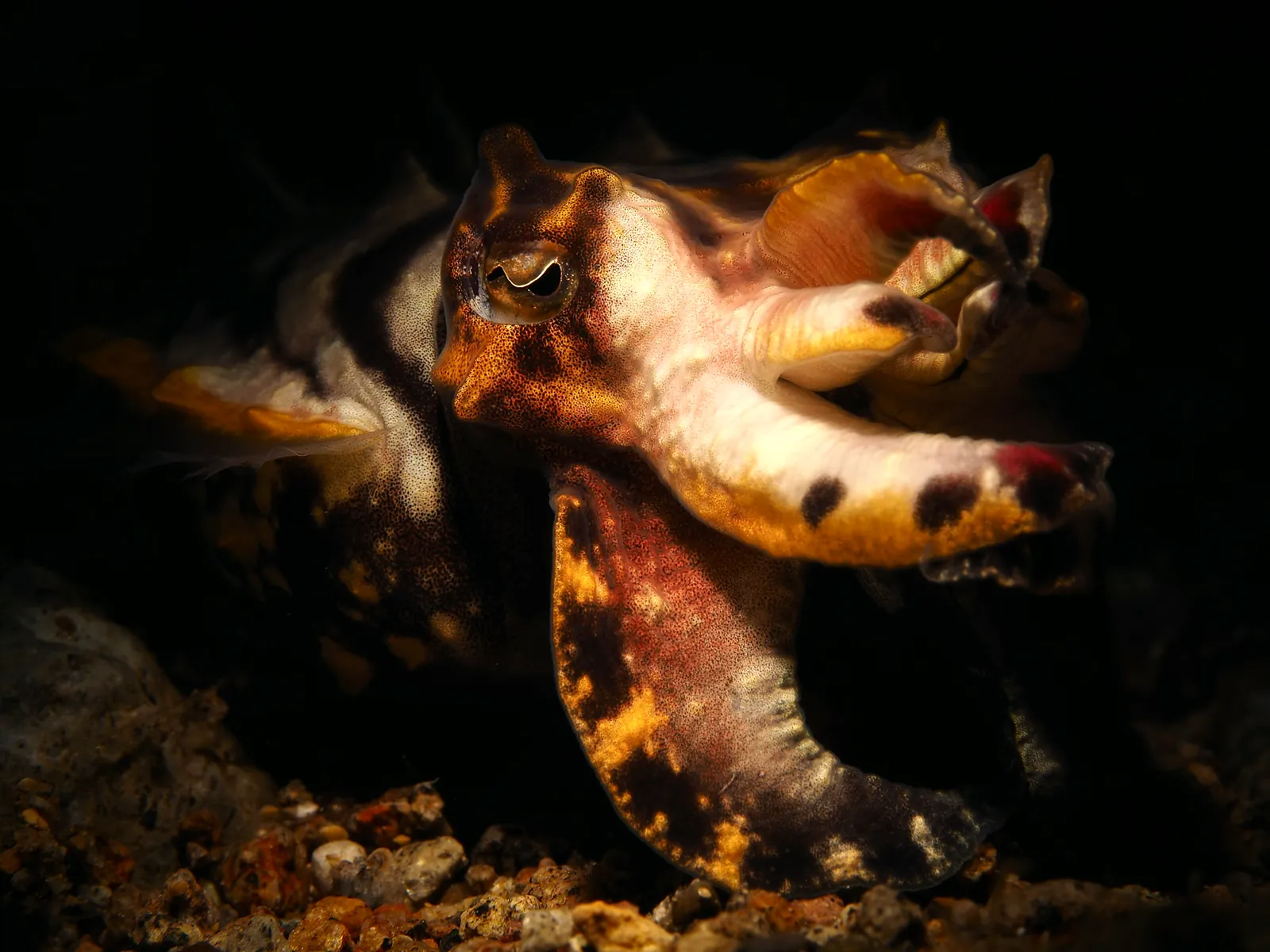
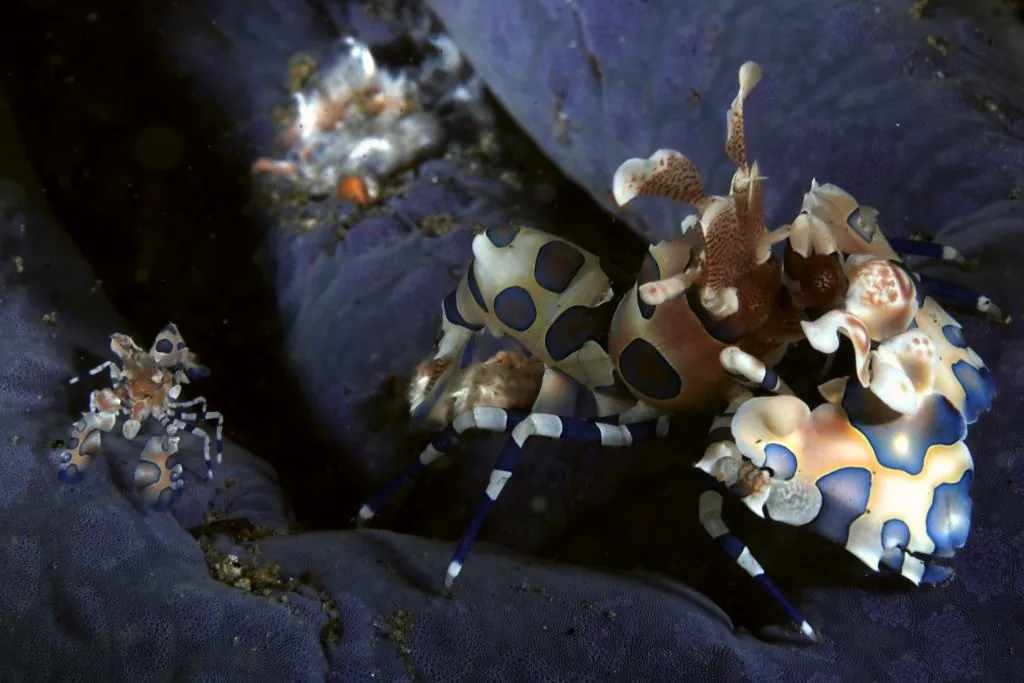
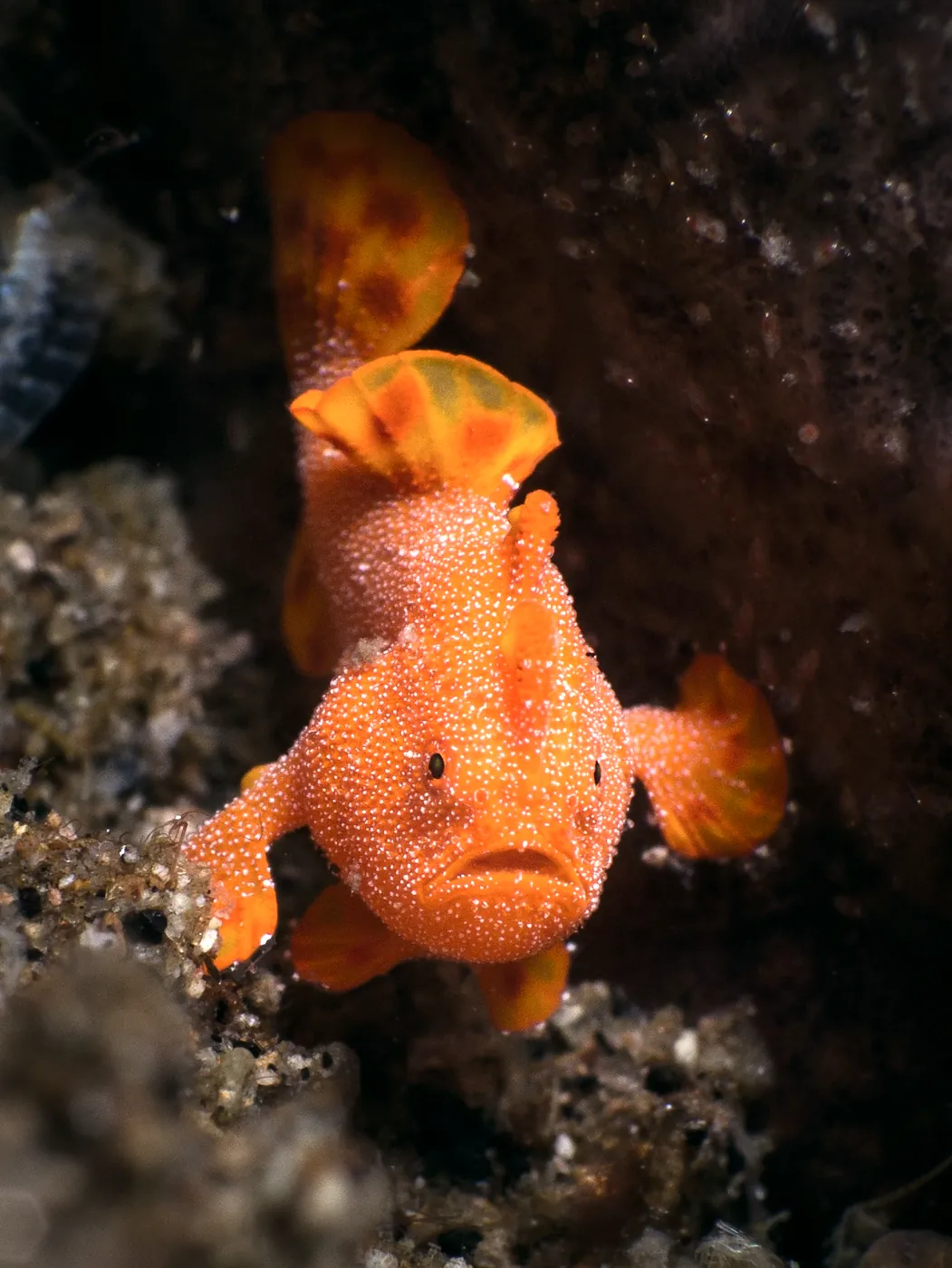
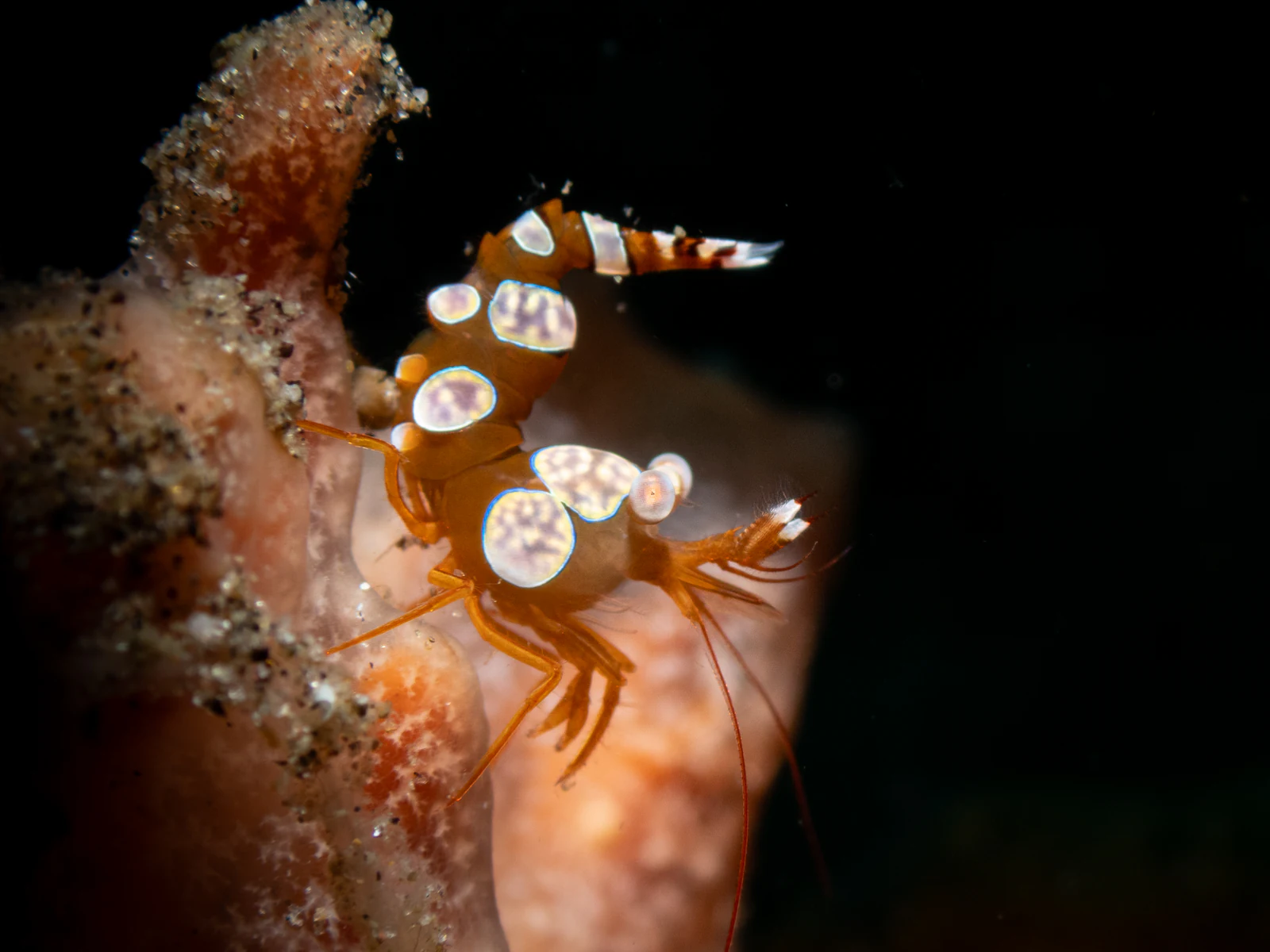
Macro life in Dauin
Small wonders & strange behaviour
Dauin’s marine sanctuaries
Dauin’s forgotten sanctuaries
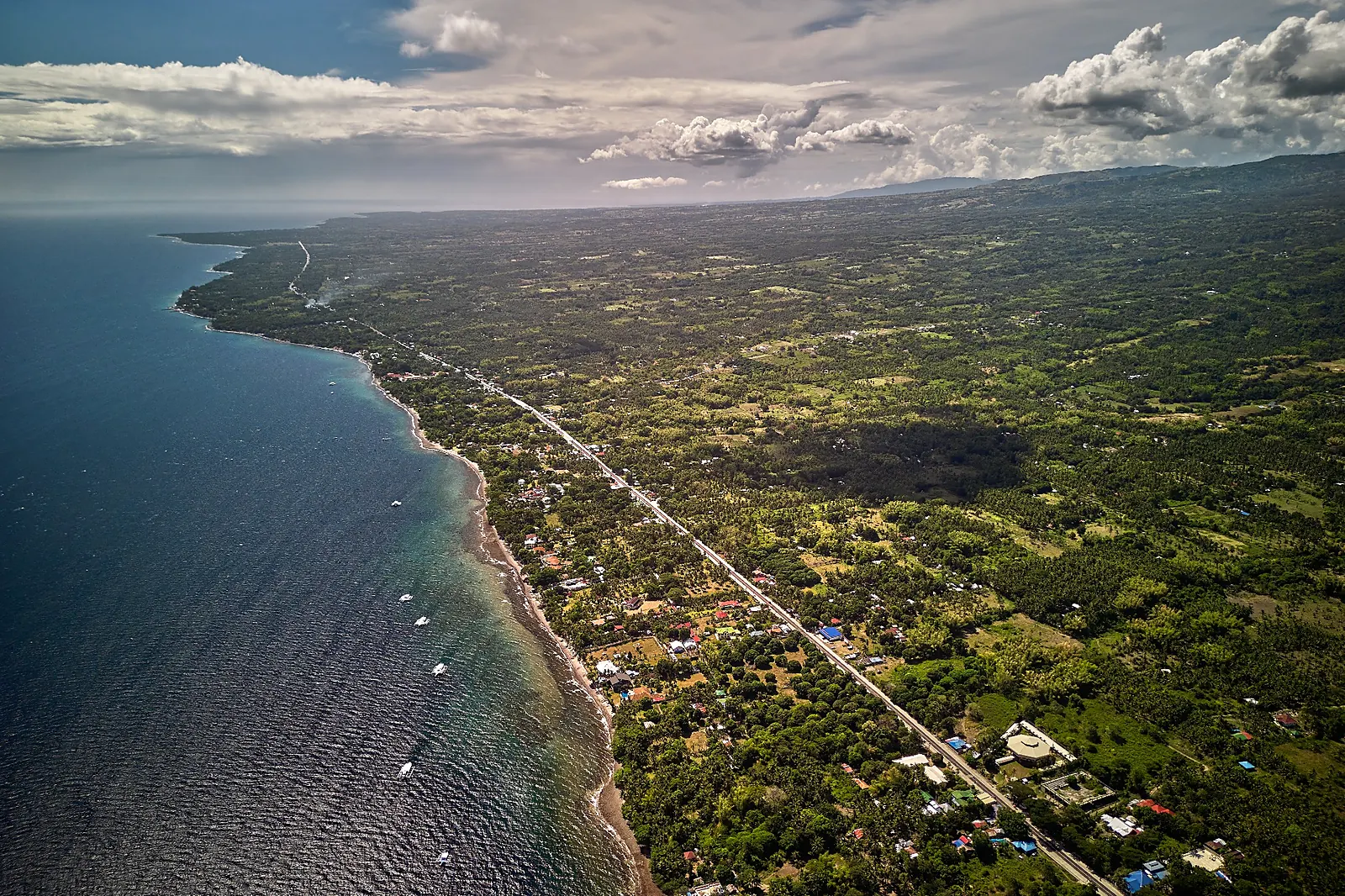
Apo Island gets the headlines, and rightly so: its sanctuary, started in the early 1980s, became a model for community-led reef protection around the world. What many people don’t know is that Apo Island is part of Dauin, and that the mainland quietly followed its example. Today Dauin is one of the great marine conservation success stories of the Philippines.
Ten protected reefs
Dauin has ten marine protected areas: nine along the mainland coast and one around Apo Island. A case study of the municipality called it “a global bright spot for marine conservation” and found all of its sanctuaries working, when only about one in ten of the Philippines’ estimated 1,500 marine protected areas was managed effectively.
Run by the people who fish here
As at Apo, each sanctuary is looked after by a local fisherfolk association, and a share of every sanctuary fee goes to that association. It gives the community a real reason to protect its reef. The municipality backs its sanctuaries firmly, and the Bantay Dagat sea wardens patrol them, so the rules are enforced.
From fishing town to dive destination
Protecting the reefs changed Dauin on land too. A small fishing town has become one of the best-known dive destinations in the Philippines, with resorts, restaurants and jobs that depend on healthy reefs. It isn’t perfect, and there are still challenges to work on, but the bigger picture is a remarkable success.
One destination, two underwater worlds
The reward is extraordinary variety. Dauin’s black volcanic sand, artificial reefs and coral-rich sanctuaries each have their own communities of animals, and more than 825 coastal fish species have been recorded here. Add the coral reefs of Apo Island and you have two different underwater worlds in one municipality. For its size, we believe it’s one of the most biodiverse places on Earth.
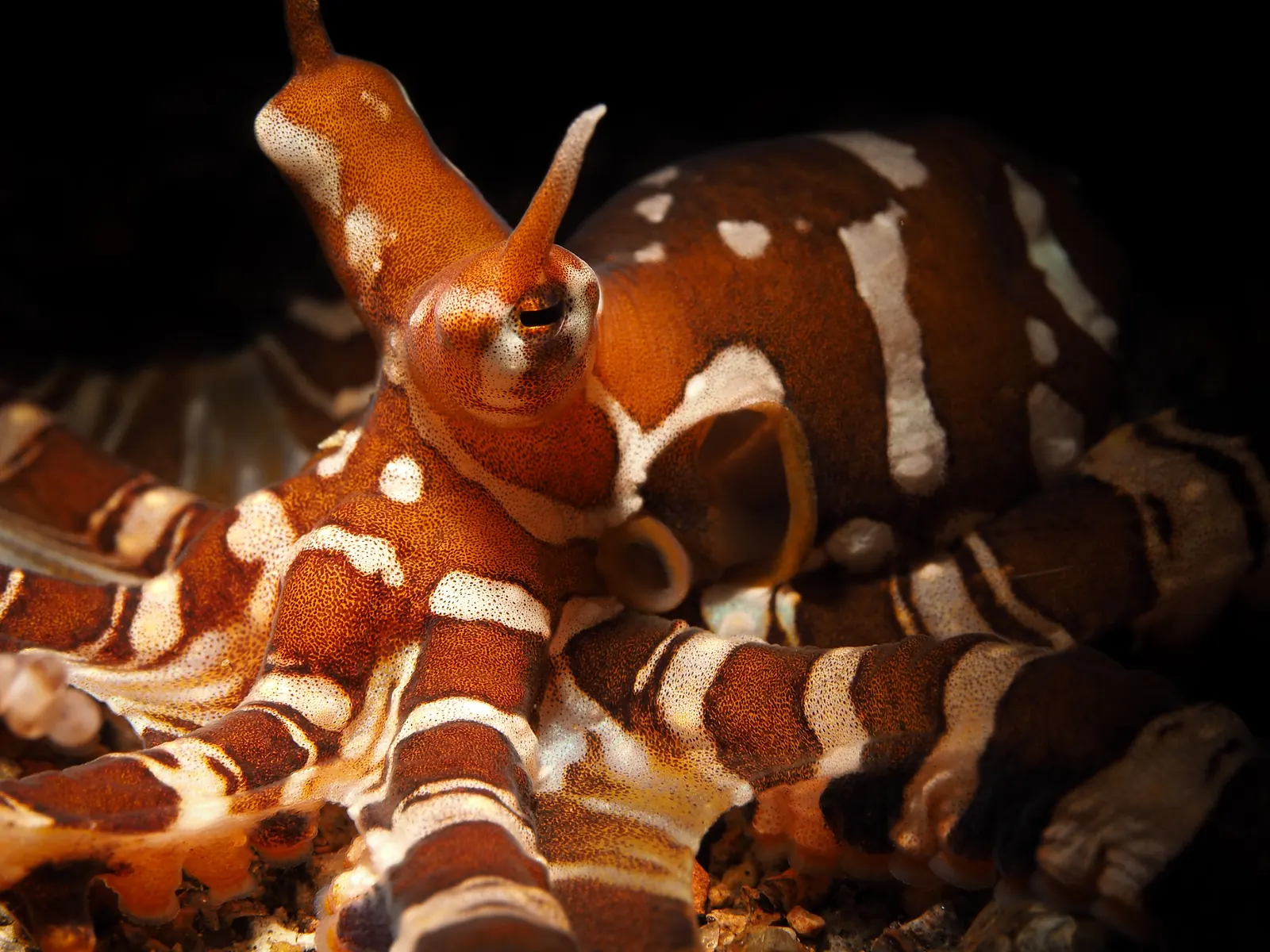
Dauin: black volcanic sand and remarkable macro life, straight from the shore.
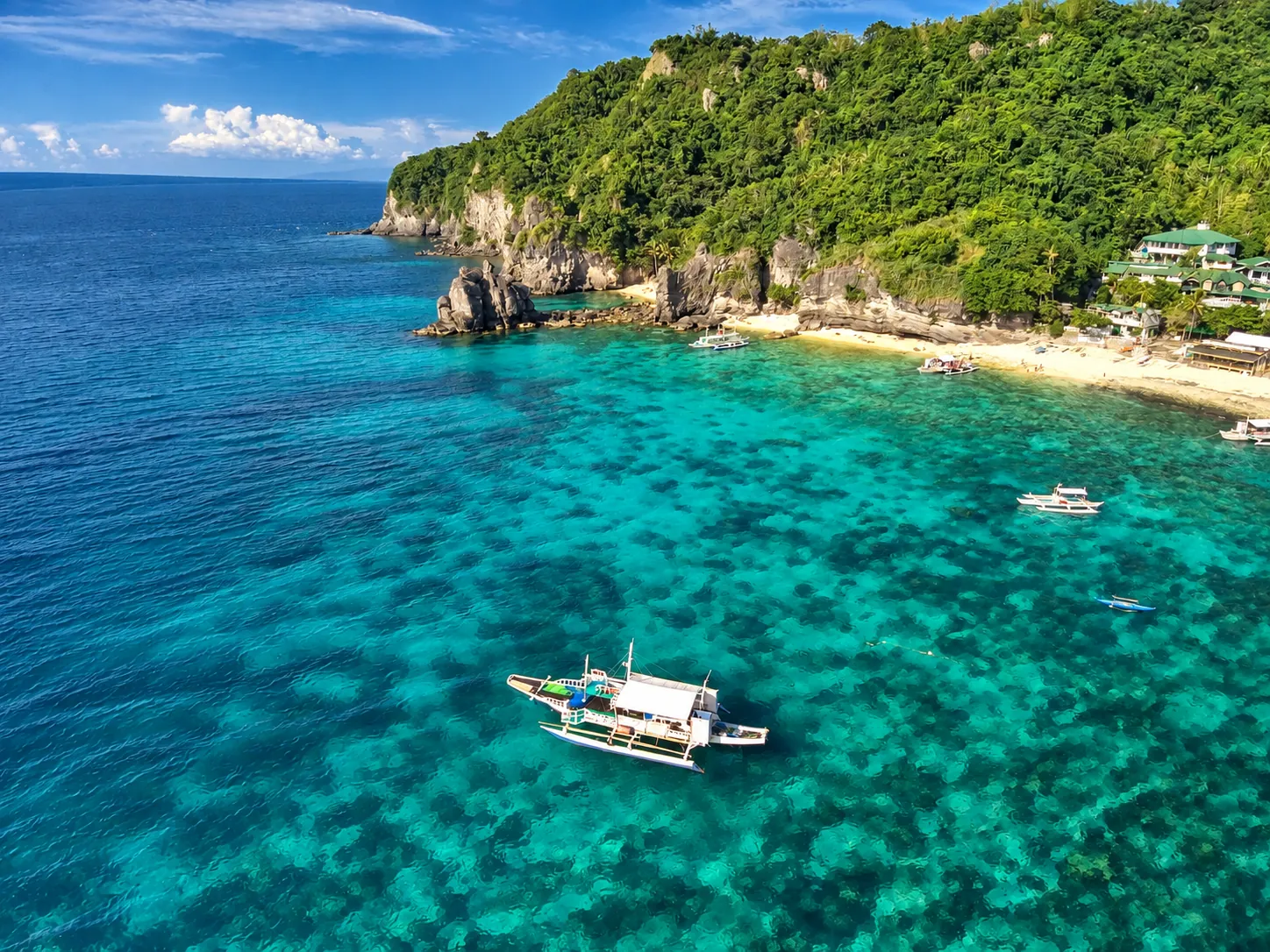
Apo Island: coral reefs, walls and turtles in a protected sanctuary, a boat ride away.
Sources: “A Case Study of the Municipality of Dauin, Negros Oriental, Philippines: A Global Bright Spot for Marine Conservation”, based on Dauin’s Marine Protected Area Management Plan 2008–2012; Biodives fish survey, figures as of November 2023.
Biodiversity
More than 800 fish species on our doorstep
Our science officer, Bart Hazes of Biodives, led a survey of the fish of Dauin and Apo Island with our dive guides, funded by the PADI AWARE Foundation. It found two species new to science and added about two dozen species to FishBase’s list of Philippine fishes.
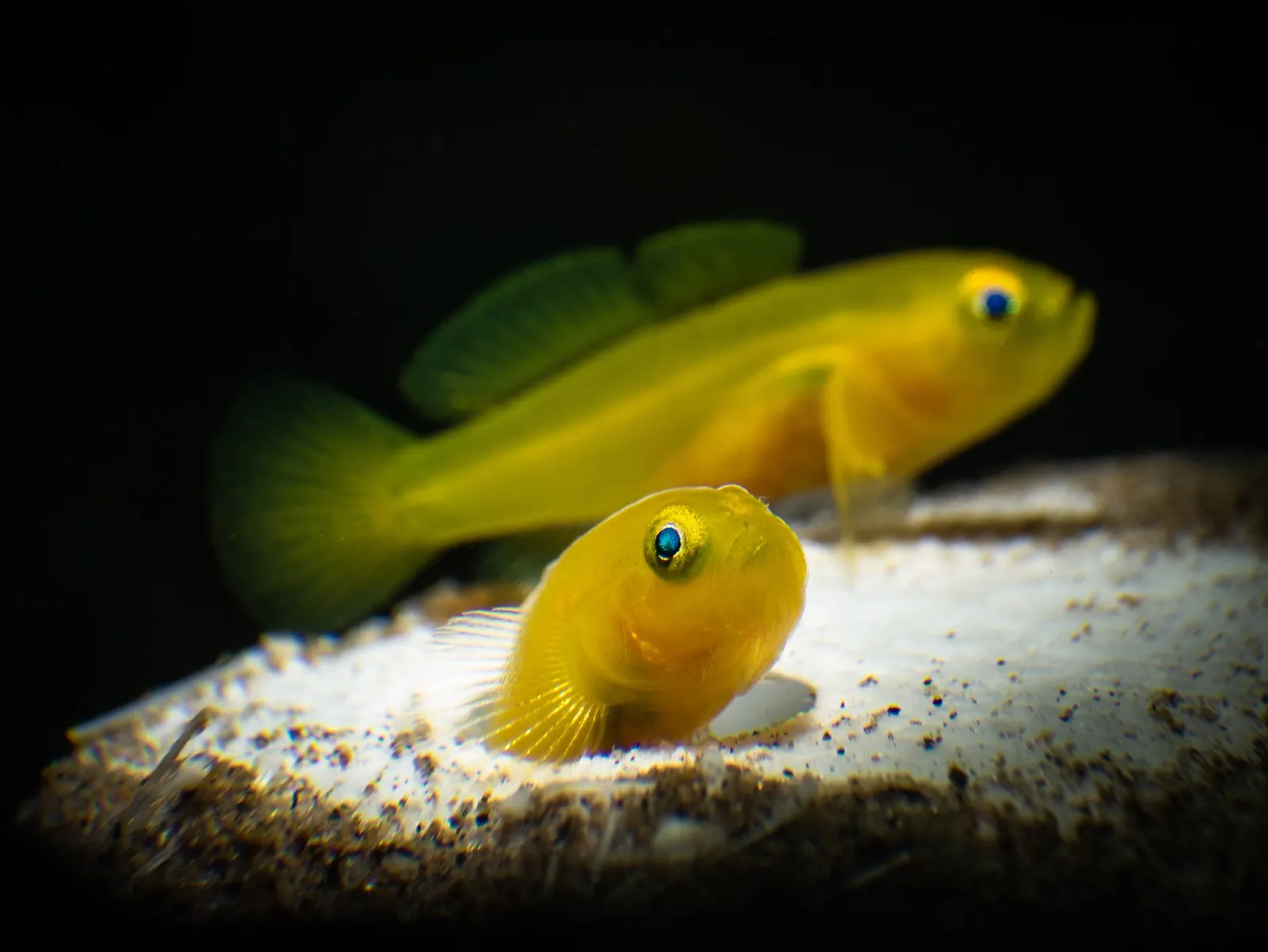
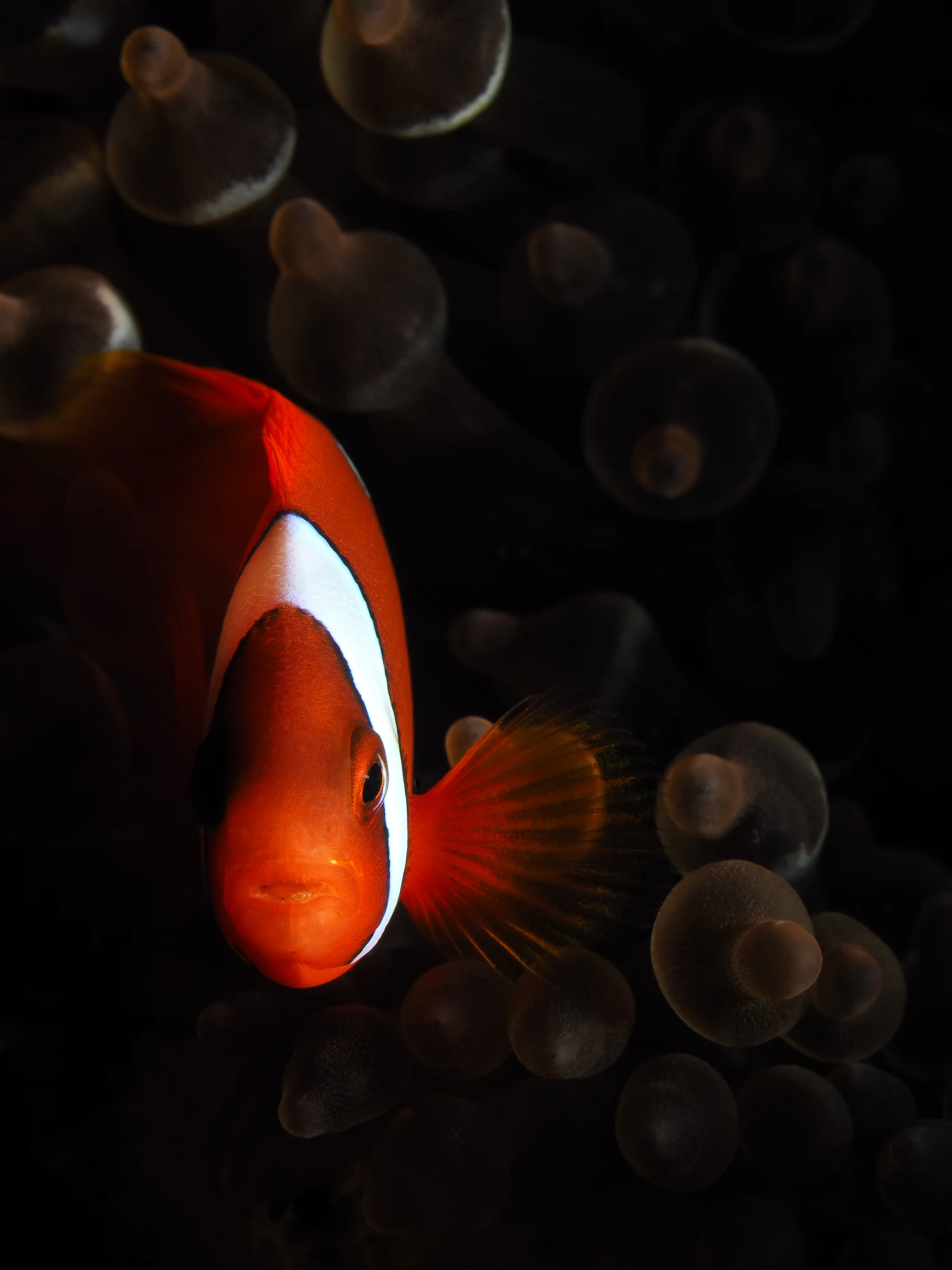
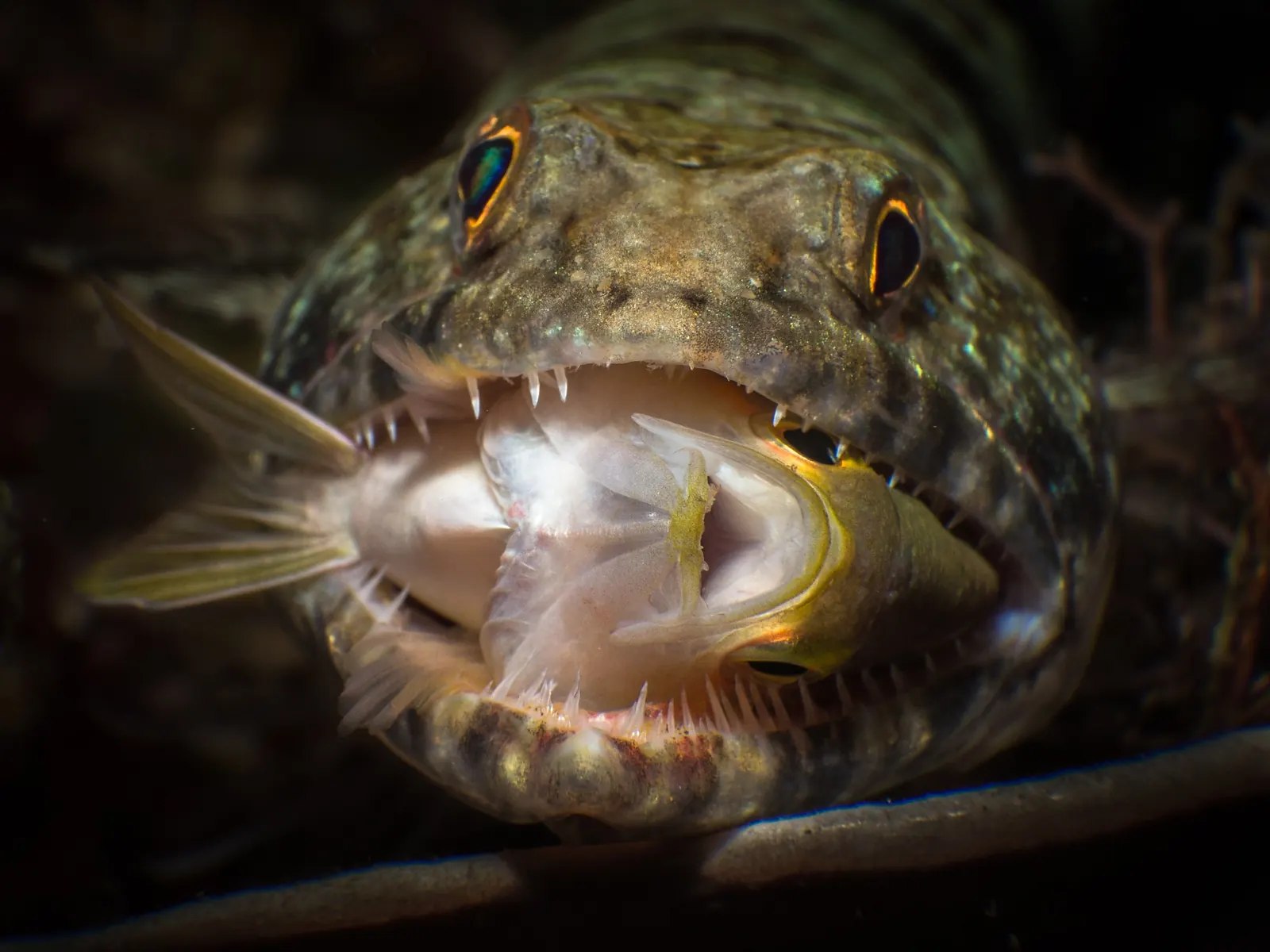
825+
coastal fish species recorded in Dauin by November 2023
560+
of them on our own house reef, Dauin North
2
fish species new to science found during the survey
How Dauin compares
For comparison, FishBase’s regional checklists list 484 fish species for Tubbataha Reef, 498 for the Verde Island Passage and 674 for the Calamian Islands. You can browse every species found so far, with photos, in the Biodives survey.
Dauin’s fish have been surprising scientists for a long time. After the 1931 Herre Philippine Expedition, fish scientist Albert Herre wrote that although Dumaguete lacks the great coral reefs found elsewhere, “no other place in the Islands has yielded so many astonishing novelties and rare species.”
Protected by the community
Dauin’s reefs are rich partly because they are protected. The municipality set up a chain of marine protected areas along its shore, and the sanctuary fees that divers and snorkellers pay are shared between local fishers’ associations (40%), the municipality (40%) and the barangays that host the sanctuaries (20%). The fees help pay for the Bantay Dagat, the sea wardens who patrol them.
Protection has paid off on land too: between 2000 and 2009, the municipality’s yearly income from diving fees and resort taxes grew from about PHP 800,000 to PHP 22–35 million. Our dive prices include the standard sanctuary fees.
Sources: Biodives fish survey (figures as of November 2023); FishBase regional checklists; and the case study “Municipality of Dauin, Negros Oriental, Philippines: A Global Bright Spot for Marine Conservation”.
How diving with Bongo works
Well-organised shore diving from our own dive centre, with a local team who dive these sites every day. Tell us about your experience and what you’d like to see, and we’ll help plan your dives.
Day dives
Our usual daily schedule: dives at 7:00 AM, 9:00 AM, 12:00 PM and 2:30 PM. Tell us what you’d like to see and we’ll plan your sites with you.
See dive prices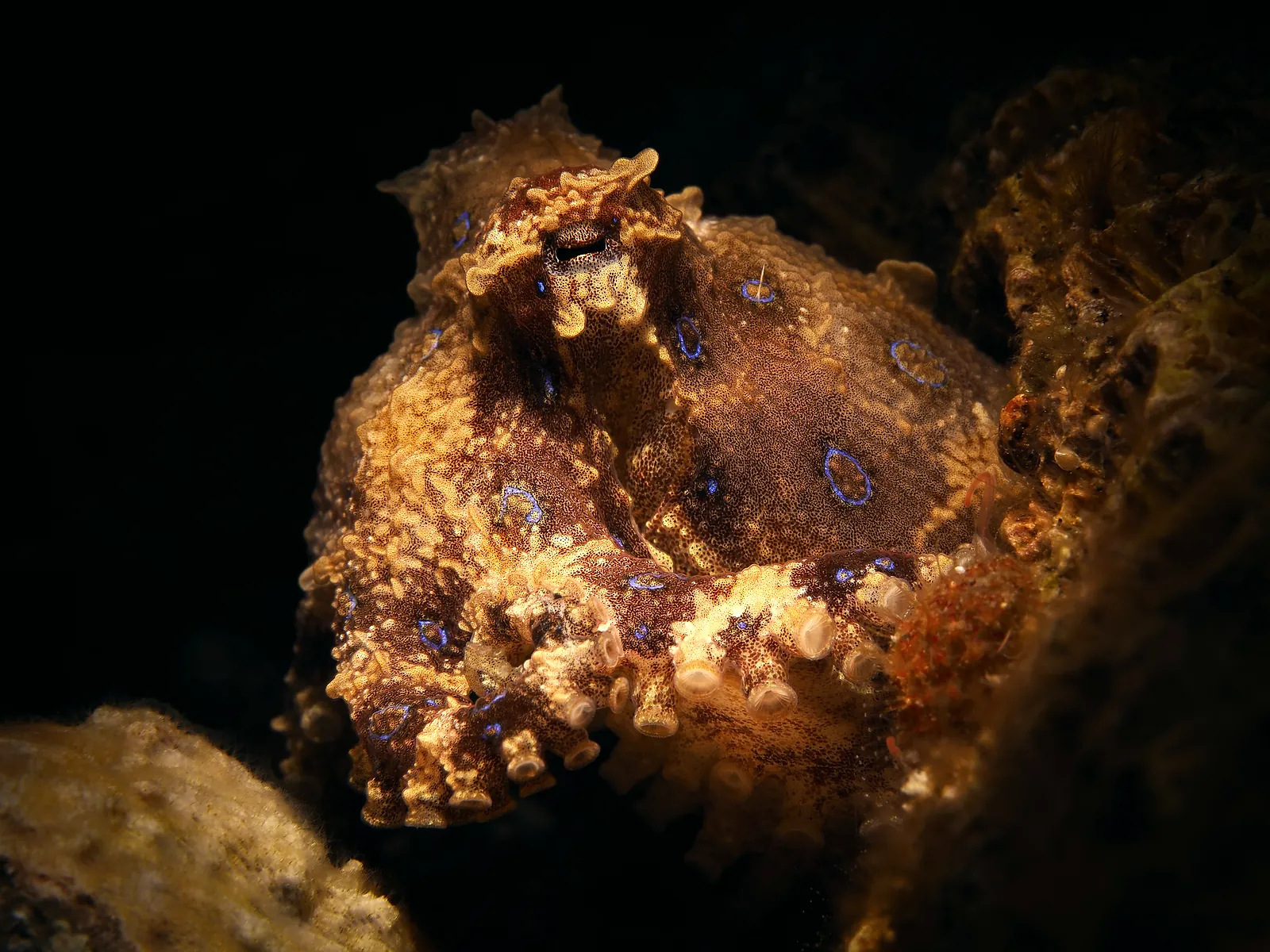
Night dives
Every evening, when Dauin’s night shift comes out. We meet around 5:45–6:00 PM, depending on the site. Torch included.
Add a night dive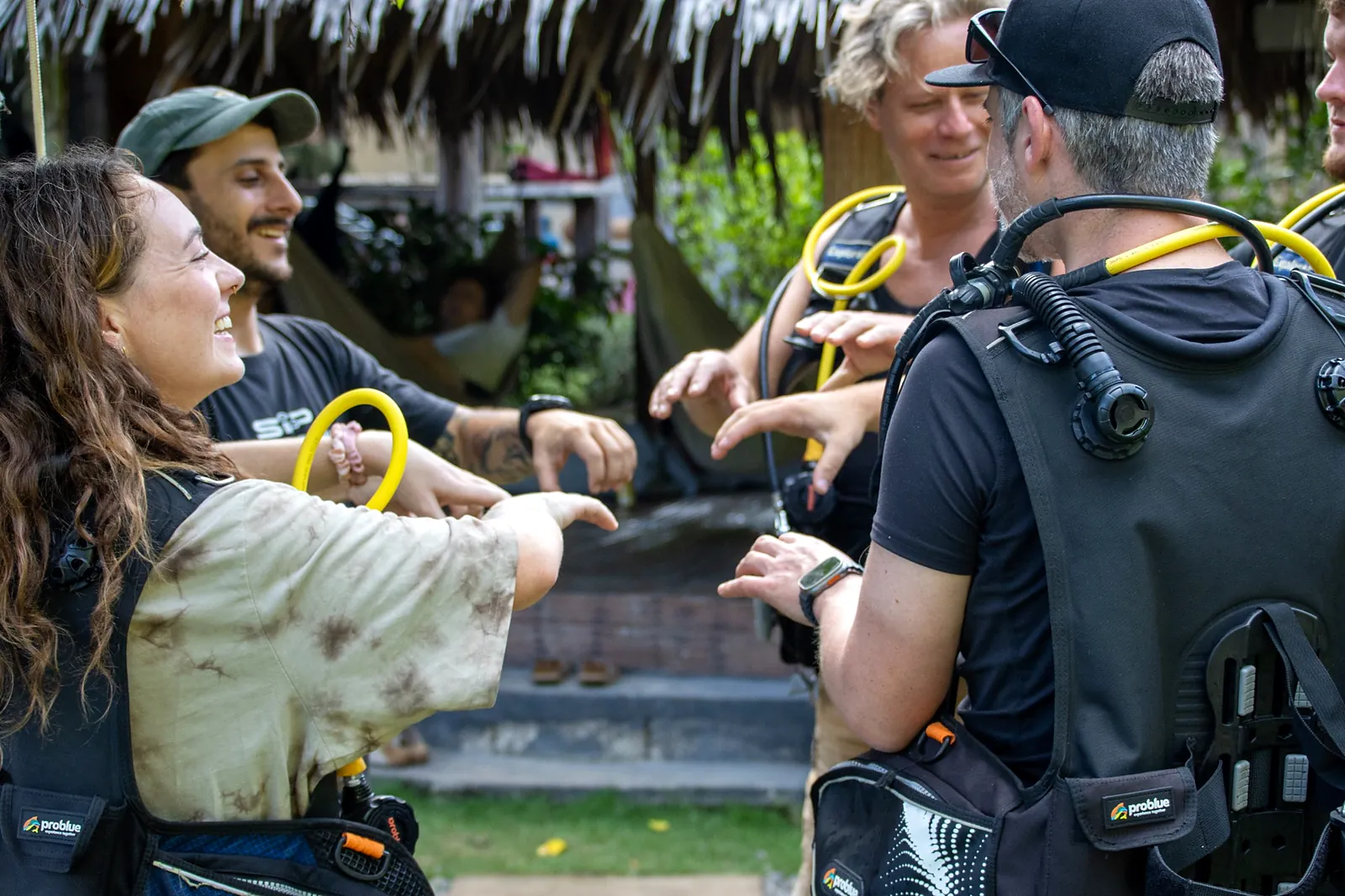
Gear & Nitrox
Full rental gear is included in our dive rates, and Nitrox is available for certified Enriched Air divers.
Build your tripLearning to dive
Why Dauin is a great place to learn to dive
Dauin is one of very few places in the world where learning to dive is this easy and this relaxed. We teach from the shore, so our instructors aren’t tied to boat schedules or other groups: they plan each course around you and your pace. You learn new skills in our pool first, then make your first open water dives on Dauin North, our calm house reef, where a gentle slope runs from a few metres down to about 25 metres and more than 560 fish species have been recorded.
Learn to dive with us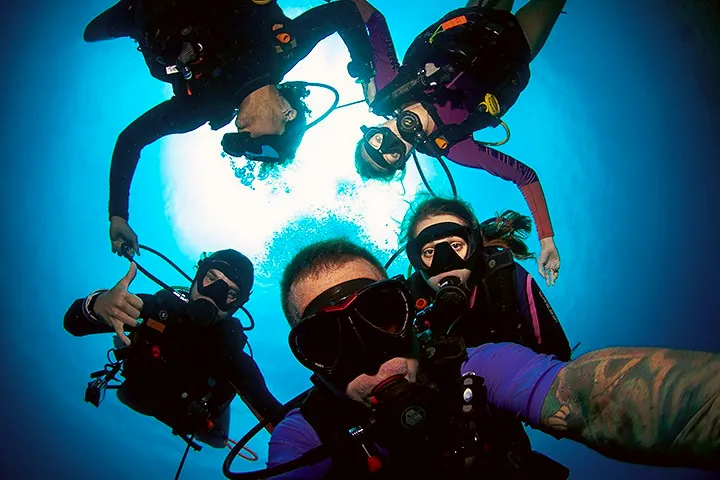
Everything you need, on site
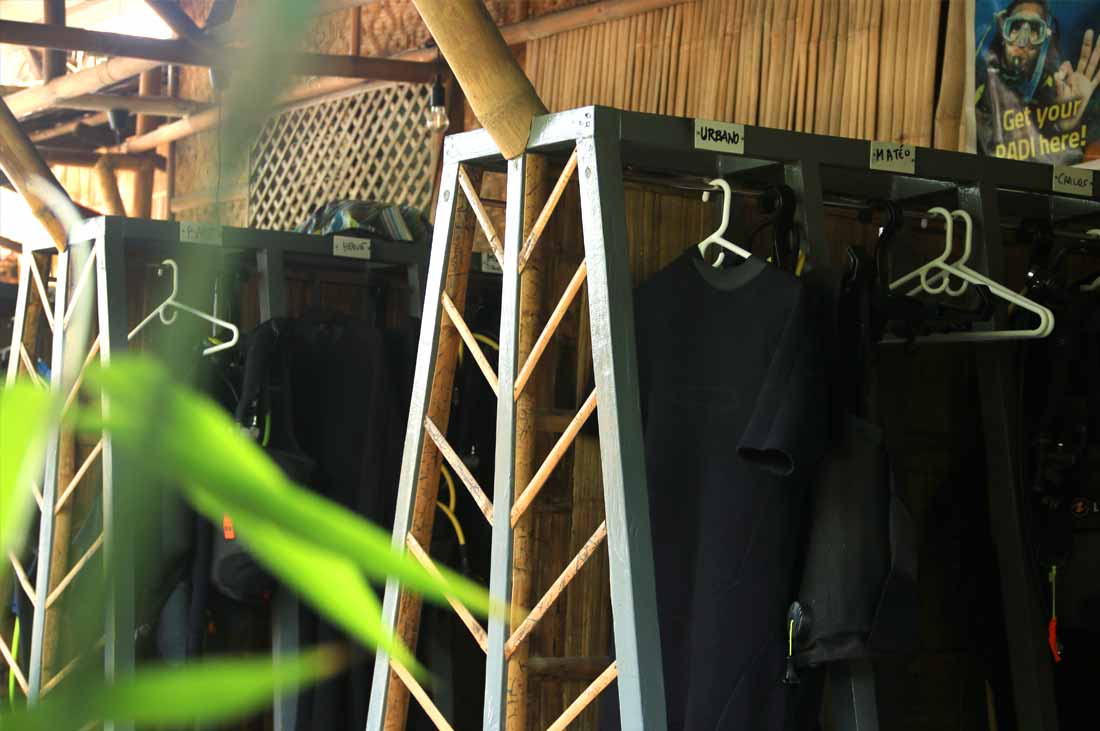
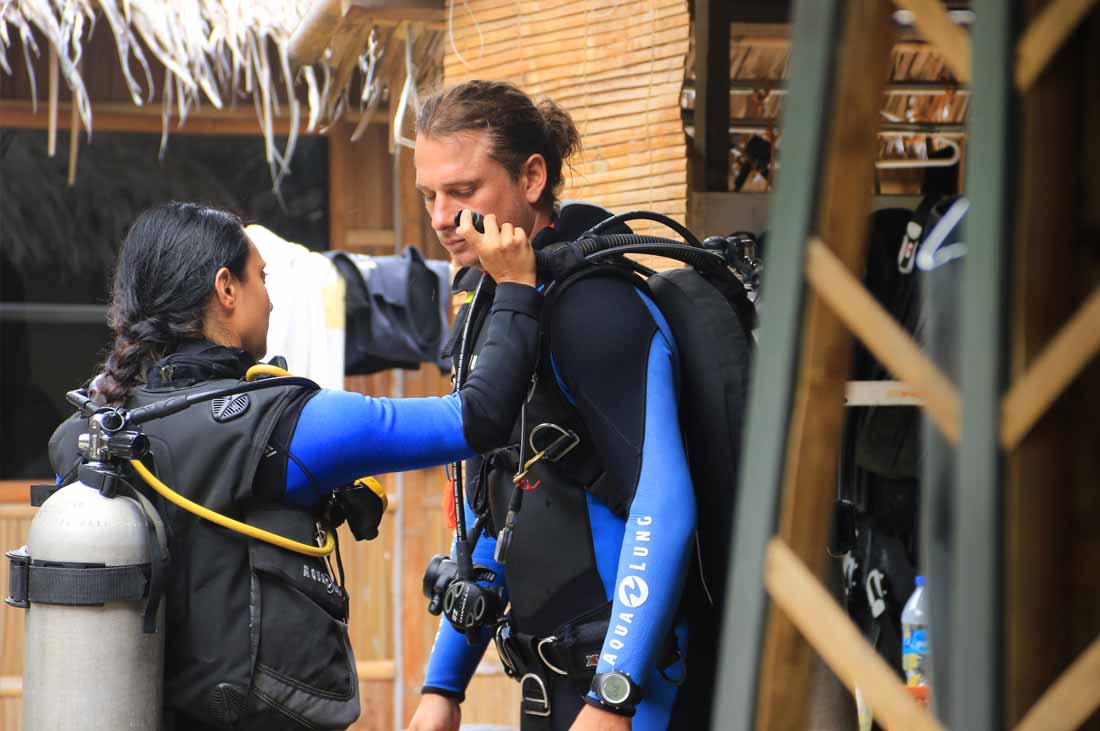
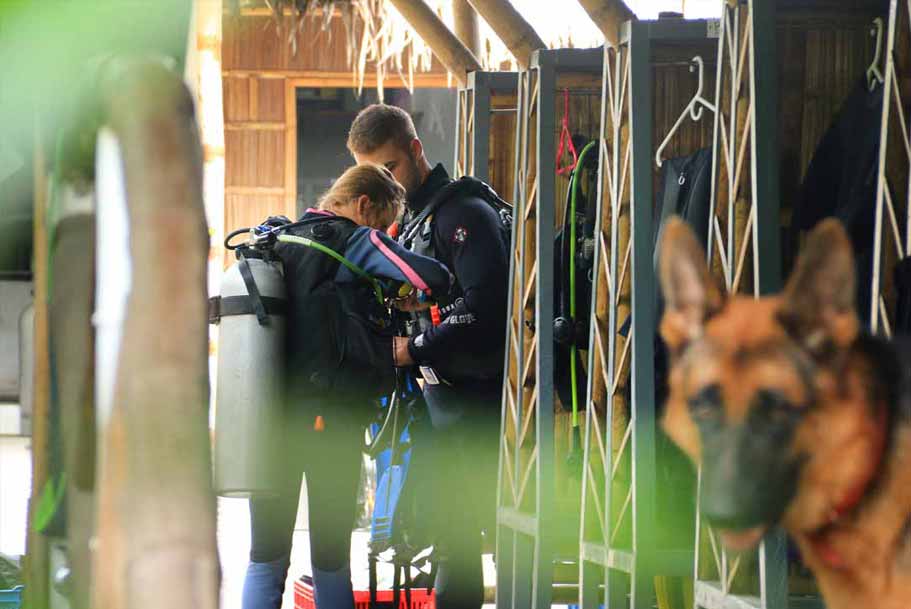
Our dive centre, equipment and tanks are just steps from the water.
Rental equipment
Full sets are included in our standard dive rates. Dive computers can be rented for PHP 500 a day.
Nitrox
15L and sidemount tanks
Dive torches
Included on every night dive. For other dives, you can rent a fully charged torch for PHP 200 per dive.
Prices & inclusions
Dauin dive prices
Per person, including standard sanctuary fees. From 10 dives we take 10% off the diving, and from 20 dives 15% (not on sanctuary fees or surcharges). Your final price is confirmed with your booking.
Dauin shore dive
Per dive
PHP 1,750*
With full equipment. PHP 1,600 with your own gear.
Included
Full rental equipment
Standard sanctuary fees
Guided by our local team
*This price includes the standard sanctuary fee of PHP 150. With a camera, add PHP 50 per dive.
Night dive
Per dive
PHP 2,150*
Including torch. PHP 2,000 with your own gear.
Included
Dive torch
Full rental equipment
Standard sanctuary fees
Every evening; time depends on the site
*This price includes the sanctuary fee of PHP 400. With a camera, add PHP 100 per dive.
Dive + stay
Your whole trip
Custom quote
Combine Dauin, Apo Island and your room in one plan.
Can include
Dauin shore dives
Apo Island day trips
Rooms on site
Airport transfers
Nitrox on request
Diving questions
The municipality of Dauin has ten marine protected areas: nine along the mainland coast and one around Apo Island, which is part of Dauin. Each sanctuary is looked after by a local fisherfolk association that receives a share of the sanctuary fees, and the Bantay Dagat sea wardens patrol them. A case study of the municipality called Dauin “a global bright spot for marine conservation”.
Our classes are small: usually two or three students per instructor. When a class has four, we usually bring in an extra assistant, so everyone gets plenty of attention. Read more about how we keep you safe.
We strongly recommend it. Treatment for a diving injury, including time in a hyperbaric chamber or an evacuation, can be expensive. We can arrange DAN dive insurance at the dive centre by the day, week, month or year.
Please wait 18 to 24 hours after your last dive before you fly. Plan your last dive day around your flight, and ask us if you’re not sure.
Yes. Dauin now has its own hyperbaric (recompression) chamber, built by the Department of Tourism and run by its infrastructure agency, TIEZA, so treatment for decompression illness is available right here. The chamber is staffed from 8 AM to 5 PM and answers emergency calls 24 hours a day, and we keep its phone numbers at the dive centre. It doesn’t replace dive insurance, which we strongly recommend, and we can arrange DAN cover at the dive centre. Read more about diving safely in Dauin.
Dauin’s shore is lined with marine protected areas set up by the municipality. The fees divers and snorkellers pay are shared between local fishers’ associations (40%), the municipality (40%) and the barangays that host the sanctuaries (20%), and they help pay for the Bantay Dagat, the sea wardens who patrol them. That protection is a big part of why Dauin is so rich in marine life. Our dive prices already include the standard sanctuary fees.
Yes. You can snorkel from the beach in Dauin’s marine sanctuary. There’s a PHP 50 sanctuary fee for the day, which is paid to the local Bantay Dagat, the sea wardens who look after the sanctuary. If you’d like to join an Apo Island trip as a snorkeller, just ask us.
Yes, Nitrox is available to certified Enriched Air divers. If you are not yet certified, you can complete the PADI Enriched Air Diver course with us.
Yes. Full rental equipment is included in our standard dive rates, and divers who bring their own gear receive a reduced rate.
Theory for PADI courses is completed online through PADI eLearning, which we send you once your booking is confirmed. Finishing it before you arrive means more of your time here is spent in the water.
When you book, please share your certification level, number of logged dives and the date of your last dive. Our team will then recommend whether a refresher or check dive is the best way to start your trip.
Dauin dive sites
Our guide to the dive sites along the Dauin coast, from our house reef to artificial reefs, old piers and volcanic sand. Choose a site to see what lives there, how deep it goes and our tips.
Build your Dauin dive trip
Tell us your dates and how many dives you’d like, and we’ll help put together your diving, room and transfers. Staying with us? Your room and our restaurant are on site, with home-roasted coffee to enjoy during your visit.