
Apo Island
Apo Island diving guide
Everything you need to plan a day of diving at Apo Island from Dauin: the island and its history, every dive site, what you might see, fees, snorkelling, what to bring, turtle etiquette and getting there.
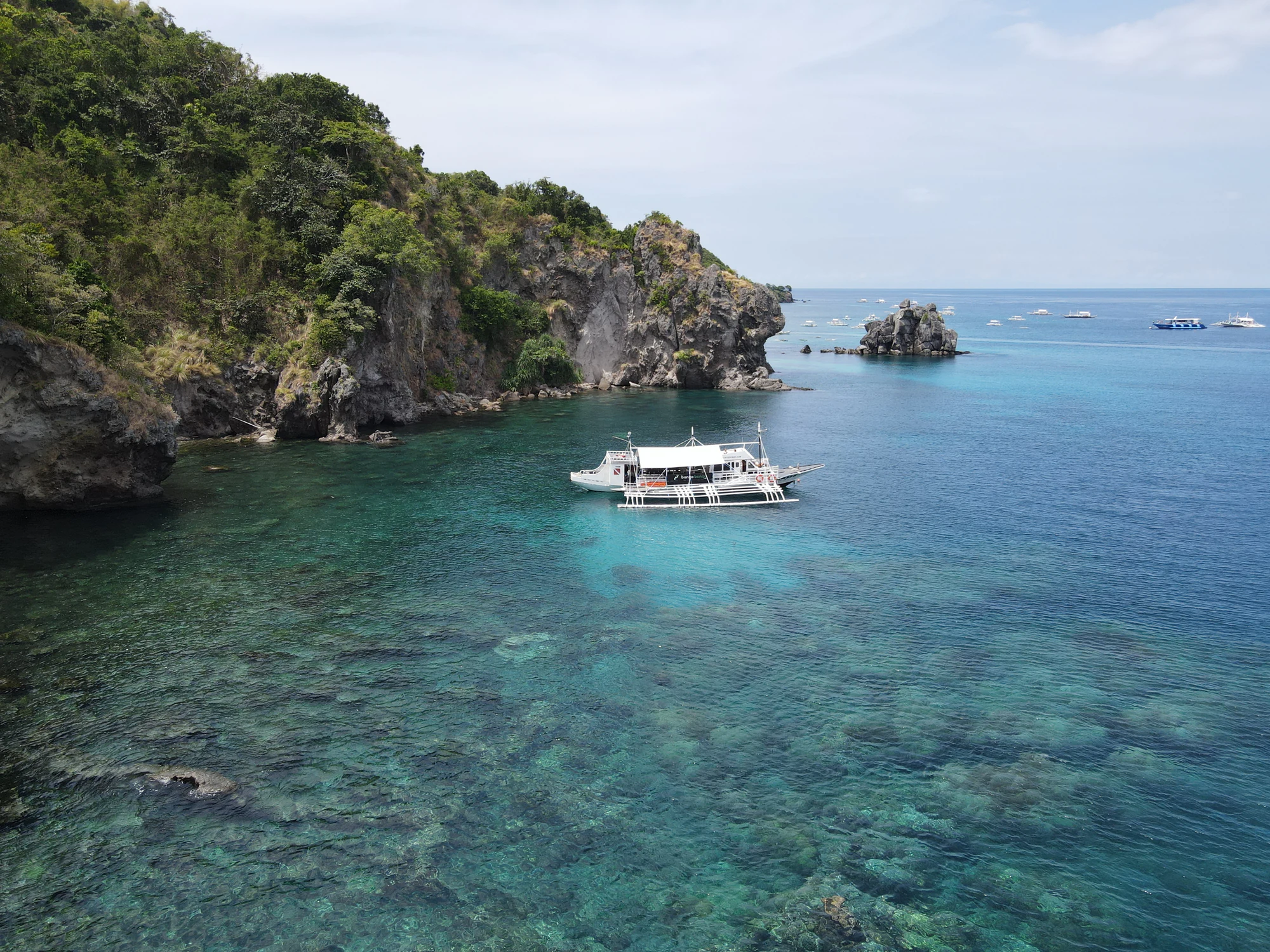
Apo Island is the reef side of a dive trip to Dauin. Where the Dauin coast is black sand and tiny critters, Apo is coral walls, schooling fish and turtles on almost every dive. The two are a 30-minute boat ride apart and part of the same municipality, which is why we call Dauin one destination with two underwater worlds. This guide covers everything we are asked about Apo Island, from its history to what to pack for the boat.
About Apo Island
Apo Island is a small volcanic island of about 72 hectares, around 7 kilometres off the south-east tip of Negros. It is part of the municipality of Dauin, and a few hundred people live in its single village, most of them fishing families. Its waters are home to more than 650 species of fish and over 400 species of coral, which is why it is one of the best-known dive destinations in the Philippines.
The island rises steeply from the sea, and underwater it does the same: coral slopes and walls drop from the shallows into deep water on almost every side. That steep profile is what gives Apo its variety, from gentle turtle reefs on the sheltered side to fast drifts and deep walls where the current runs.
A pioneer of community conservation
In 1982, with help from Dr Angel Alcala and the Silliman University Marine Laboratory, Apo Island’s fishing families chose an area of reef to protect as a no-take marine sanctuary. Fish numbers recovered inside it and spilled over into the fishing grounds around it, and Apo became an internationally influential model of how local communities can protect their own reefs. The island and its waters are now a protected landscape and seascape under Philippine law, and the fees divers pay help look after them.
The idea spread. Apo Island is part of Dauin, and the mainland followed its example with a chain of marine protected areas along the coast, ten in all today. That is a large part of why the diving in both places is as rich as it is. You can read more about Dauin’s sanctuaries in our guide to diving in Dauin.
The marine sanctuary today
Typhoon Sendong in December 2011 and Typhoon Pablo in December 2012 destroyed most of the coral in the sanctuary itself; surveys by the Coastal Conservation and Education Foundation recorded coral damage of 99%. The sanctuary has been closed to divers ever since, so the reef can recover. New corals are spawning there, and schools of juvenile jacks swim in the protected area. Read more on our Apo Island Marine Sanctuary page.
The rest of the island’s reefs are open, and they are the ones we dive. They were far less affected by the typhoons and are in excellent condition.
The dive sites we visit
Which sites we dive depends on the day’s conditions: the wind, the swell and the current decide which side of the island is best. These are the nine on our list, each with its own page.
Easy and turtle-rich
- Katipanan: a gentle coral slope from 5 to 24 metres, with some of the most turtles in the shallows anywhere on Apo. Ideal for newer divers and for anyone’s first Apo dive.
The southern tip
- Rock Point East and Rock Point West: we usually dive these two together, East to West or West to East depending on the current. The southern tip of the island sits between them, with some of the most stunning soft corals on Apo. Turtles in the shallows, sea kraits in season, Spanish mackerel passing by, and the eastern side is where we have seen hammerheads and other sharks. Not planned as a drift, but the current can rip, so we take a conservative route on strong days.
Walls
- Largahan: volcanic bubbles rising from the sand, a wall at 20 to 30 metres and hawksbill turtles around a huge turtle rock. By tradition, the last dive before leaving Apo.
- Chapel: in front of the island’s chapel, one of Apo’s most famous dives and one of its most dramatic walls, dropping more than 100 metres. A small overhang to swim into, an electric clam, sea kraits, and turtles on the reef on the way back. A wall dive, not a drift.
- Kan-uran: on the back side of the island, some of Apo’s most dramatic walls, with sea fans, soft corals and a good chance of pelagics. Also the finish of the classic drift from Cogon through Mamsa Point.
Current and pelagics
- Cogon: one of our favourites. A dramatic drift from sand to patchy reef and walls, with passing pelagics and, with luck, a big school of jacks. For experienced divers. On the right day it is the start of the classic Apo drift: Cogon, through Mamsa Point, to Kan-uran, three sites in one dive.
- Mamsa Point: Mamsa means jackfish. This is the tip of the island where the current runs down, bringing jacks and giant trevally, with a sandy arena ringed by coral and giant frogfish on the sponges. The middle of the Cogon to Kan-uran drift. Thrilling when the current rips, with a downwelling to respect. Best from around April to November.
- Coconut Point: Apo’s famous “washing machine”. One of the island’s most thrilling dives and the most technically demanding, with strong down currents, schools of jacks and barracuda, and a wall that drops into the blue at around 30 metres. Experienced divers only, and only when our divemasters judge the conditions right. Best from around April to November.
What you might see
Apo is the wide-angle side of a trip to Dauin. Expect hard and soft corals, sea fans and lots of reef fish, and turtles are a regular sight, both green and hawksbill. Depending on the site, look out for banded sea kraits, jacks and giant trevally, schools of barracuda, marbled groupers, giant frogfish, eagle rays and Spanish mackerel. On the eastern side of the southern tip we have also seen hammerheads and other sharks, on a lucky day.
The turtles are the stars. Apo’s turtles have been protected for decades and are used to divers, so they feed and rest while you watch from a respectful distance. On a good day at Katipanan or Rock Point you may see several on one dive.
Currents and seasons
Apo’s currents are part of what makes it so rich, and some sites need the right day. Mamsa Point and Coconut Point are normally best from around April to October or November, in the Habagat season (the southwest monsoon), when they sit on the lee of the island. In the Amihan season (the northeast monsoon) those sites are exposed to big waves, which can make the entry and exit difficult and the down currents at Coconut much stronger, so we choose other sites. Our divemasters decide on the day, based on the tides and the weather.
Your day trip with us
- 7:45 AM: meet at the dive centre. We walk to the boat at about 8:00 while the crew clears our departure with the Coast Guard.
- 8:15 AM: we leave for Apo Island. The crossing takes around 30 to 45 minutes depending on the sea.
- Three reef dives through the day, with a surface interval, lunch, drinks and towels on board.
- 3:30 to 4:00 PM: back in Dauin, in time for a coffee on our terrace and, if you like, a night dive on the house reef.
The day trip is PHP 5,900 per person with full equipment, or PHP 5,500 with your own gear, plus a temporary fuel surcharge of PHP 600 per diver. Sanctuary fees are included; they are currently PHP 300 for three dives and are expected to double by the end of 2026, so we will confirm the price with you before you book. A 50% deposit holds your place. See Apo Island day trips for the details.
Who can dive Apo Island
Any certified diver can join an Apo day. We plan the sites around the group: newer divers get the gentle slopes and turtle reefs, and experienced divers can ask for the walls and drifts. If you are finishing your Open Water course with us, you can do your last dives at Apo for a small extra charge.
Nitrox is available for certified Enriched Air divers and is worth having on a three-dive day. Advanced Open Water certification lets you make the most of the walls.
What to bring
- Your certification card, or let us check it the day before.
- Sun protection: a hat, a rash guard or long sleeves, and reef-safe sunscreen. The boat has shade, but the crossing and the surface intervals are in the open.
- A 3 mm wetsuit is enough for most of the year; from late December to March, when the water drops to about 25–26°C, a 5 mm is more comfortable for three dives.
- A dive computer. You can rent one from us for PHP 500 a day.
- Seasickness tablets if you are prone to it, taken before we leave.
- Cash in pesos for the island’s small shops if we stop ashore, and for any extra fees.
- Your camera with a wide-angle setup. Leave the macro lens for Dauin.
Diving with turtles and sea snakes
Apo’s turtles are relaxed because divers have treated them well for a long time. Please keep it that way:
- Stay still and let the turtle come to you. A diver who hovers quietly gets a far better encounter than one who swims after it.
- Never touch, ride or block a turtle, and never get between it and the surface; it needs to breathe.
- Keep your fins off the coral. Turtles feed on and around it.
Banded sea kraits, the sea snakes you see all around Apo, are venomous, but they are not aggressive and have very small mouths. Give them room and they will ignore you.
Photography at Apo Island
Apo is for wide-angle: turtles against the blue, walls with sea fans, schools of jacks. Bring a wide lens or a fisheye and, if you have them, strobes for the colour in the shallows. On drift dives, set your camera before you descend and keep it close to your body in the current. On the turtle reefs, approach low and slow and shoot upwards for the best light.
If you are a macro photographer, the giant frogfish at Mamsa Point, the frogfish that hide around the Rock Points and the electric clam at Chapel are the Apo subjects worth a longer lens.
Snorkelling at Apo Island
Snorkellers can join our Apo trip if there is space on the boat. The snorkelling trip visits three sites and costs PHP 2,500 per person, including lunch, snorkelling equipment and marine sanctuary fees. Turtles are often in water shallow enough to see from the surface, which makes Apo one of the best snorkelling spots in the region. Please follow the same rules as divers: no touching, no chasing, no standing on coral. Let us know when you enquire.
When to go
Apo Island trips run all year and are rarely cancelled. When they are, it is usually because a typhoon is sending big swells our way and the Coast Guard has issued a warning. The dry season, from about November to May, generally brings the calmest seas and clearest water; in the wetter months we still go, choosing the sheltered side of the island on the day. Which sites are on that sheltered side changes with the season: see Currents and seasons above.
Plan a few days in Dauin around your Apo day, so there is room to move it if the weather changes. Five days or more is ideal. See when to dive Dauin for the seasons and water temperatures month by month.
Getting to Apo Island
Staying with us, you walk from the dive centre to our boat; there is nothing to arrange. Dauin itself is about 20 to 30 minutes south of Dumaguete, and we can book a private transfer from Dumaguete airport or the Sibulan ferry port. See getting to Dauin.
If you are travelling independently, public boats to Apo Island leave from Malatapay in Zamboanguita, about 30 minutes away by boat. The island has a handful of small lodges and homestays for divers who want to stay overnight, though most divers visit on a day trip from the Dauin coast, where there is far more choice of rooms, restaurants and dive sites.
Day trip or stay on the island?
A day trip from Dauin gives you three Apo dives and Dauin’s muck diving in the same week, with a comfortable room, a restaurant and a dive centre on site. Staying on the island suits divers who want several Apo days in a row and don’t mind simpler accommodation and limited electricity and water. Many of our guests do two Apo days in a week, with Dauin dives in between: it is the best of both.
Frequently asked questions
How far is Apo Island from Dauin?
About 7 kilometres off the coast. Our boat takes around 30 to 45 minutes each way, depending on the sea.
How many dives do you do at Apo Island?
Three, with lunch and drinks on the boat between them. Nitrox is available for certified Enriched Air divers.
Can beginners dive Apo Island?
Yes. Katipanan is a gentle reef with turtles, and we plan the sites around the group. The drifts at Cogon and Coconut Point, and Mamsa Point when the current runs, are for experienced divers.
Will I see turtles?
Very likely. Green and hawksbill turtles are resident at Apo and are seen on most dives, especially at Katipanan, Rock Point and Largahan. Sightings are never guaranteed, but Apo is one of the most reliable places in the Philippines to see them.
Is the Apo Island sanctuary open?
The original sanctuary on the south-east side is closed to divers while its reef recovers from the 2011 and 2012 typhoons. All of the island’s other dive sites are open.
What are the Apo Island fees?
Sanctuary fees are included in our day-trip price. They are currently PHP 300 for three dives and are expected to double by the end of 2026. We confirm the final price with you before you book.
Can I snorkel instead of dive?
Yes, if there is space on the boat. The snorkelling trip is PHP 2,500 per person with lunch, equipment and sanctuary fees.
What if the weather cancels my Apo day?
We move it to another day if we can, which is why we suggest five days or more in Dauin. If it cannot be rescheduled, your Apo deposit is refunded.
Can I fly the day after Apo Island?
Please wait 18 to 24 hours after your last dive before you fly. Make Apo the day before your last day, not your last day.
Ready to plan? Build your dive trip and add an Apo Island day. You might also like our guide to muck diving in Dauin and our 7-day Dauin and Apo Island itinerary.