
Trip planning
Dauin vs Anilao vs Lembeh: which muck diving destination is right for you?
The three best-known muck diving destinations in South-East Asia compared honestly: critters, reef days, travel time, cost and who each one suits.
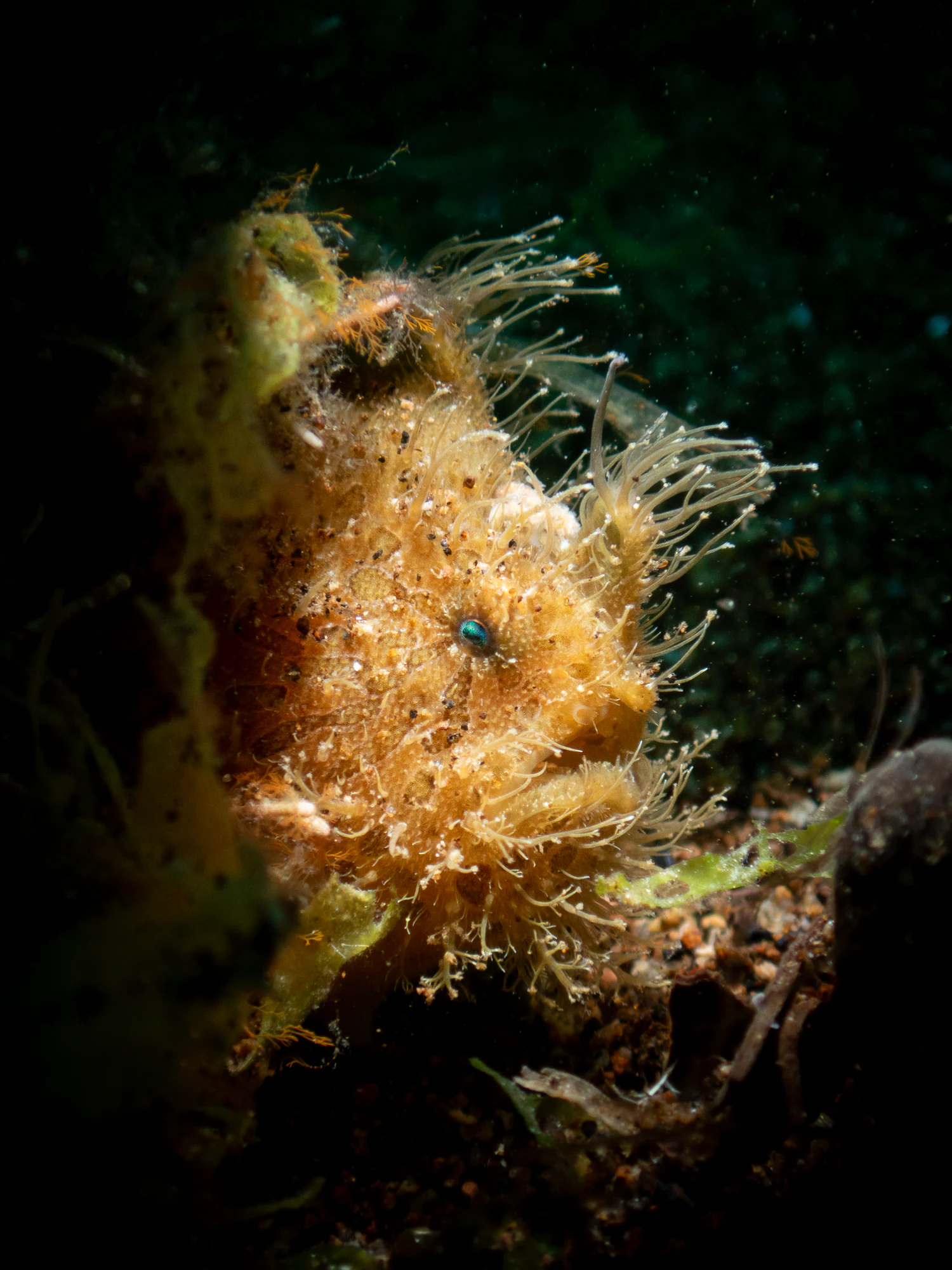
If you love muck diving, three names come up again and again: Lembeh Strait in Indonesia, Anilao in the Philippines, and Dauin, where we are. All three are world class. They are also different enough that the right choice depends on what you want from your trip. We run a dive centre in Dauin, so we have an obvious interest, but we have tried to keep this comparison fair. Where Lembeh or Anilao does something better, we say so.
The short version
- Lembeh is the most famous and probably the most concentrated muck diving on Earth, with a long list of rare critters. It is also the furthest to travel for most people, and it is muck diving almost all the time, with few coral reefs nearby.
- Anilao is the closest to Manila and a favourite with Filipino and visiting photographers for its nudibranch variety. It is boat diving, with a busy weekend scene and a mix of muck and reef sites.
- Dauin gives you muck diving from the shore, so there are no boat schedules, plus a different kind of diving at Apo Island, one of the Philippines’ best coral reefs, 30 minutes away by boat. It has an island feel without being cut off, it is the best value of the three, and it is the easiest to combine with a relaxed stay.
The critters
All three destinations share most of the same cast: frogfish (hairy, painted, warty and giant), mimic, wonderpus and blue-ringed octopus, flamboyant cuttlefish, ghost pipefish, seahorses, harlequin shrimps and a long list of nudibranchs.
Lembeh has the deepest bench. Species that are rare elsewhere, such as Rhinopias and some of the stranger frogfish and octopus, are seen more regularly there, and the density of guides who do nothing but find critters is unmatched.
Anilao is particularly rich in nudibranchs and is well known for photographic variety; serious nudibranch hunters often rate it as the best of the three for sea slugs.
Dauin holds its own. A fish survey led by our science officer, Bart Hazes of Biodives, and funded by the PADI AWARE Foundation, recorded more than 825 coastal fish species here, two of them new to science. We see Rhinopias at Talisay, and Secret Corner alone gives us mimic, wonderpus, blue-ringed, mototi, algae and coconut octopus, plus several kinds of cuttlefish. Frogfish are here all year, with a peak from March to June. What Dauin does not have is Lembeh’s sheer density; what it has instead is variety across sand, artificial reefs and coral on the same coast.
Seasons, years and luck
Here is the part most comparisons leave out. We have had guests who have dived all three and swear Dauin is the best, and guests who say the same about Lembeh. Both are right, because what you see depends less on the destination than on when you go, and on the year.
No two years are the same. Some years we see several hairy frogfish, and other frogfish species, on the sand at once; other years there are fewer. The same animals keep turning up, but the numbers and the surprises change from year to year, from week to week within a season, and from one dive to the next. Lembeh and Anilao are no different. If you hit a destination in the right week of the right year, it shows you its best side, and that is a large part of what critter hunting is: good guides, the right season, and a fair amount of luck.
That is also why one place never replaces another. We have guests who come back every year and dive all three, and enjoy all three. Our when to dive Dauin page gives you the best odds here month by month.
Reef diving on the same trip
This is the biggest difference, and for many divers it decides the trip.
Dauin has Apo Island, 7 kilometres offshore: coral walls, drift dives, schooling jacks and turtles on almost every dive. A week here can be four days of critters and two days of reef, with no change of base.
Anilao has good reef and coral sites in the same area, so you can mix muck and reef dives, though the reef diving is generally rated below Apo Island’s.
Lembeh is almost entirely muck. There are a few reef sites, and Bunaken is a separate trip on the other side of Manado, but if you want big reef scenery you are usually adding a second destination.
Shore or boat?
Dauin is mostly shore diving. You walk in from the beach, which means long bottom times, no boat schedules, dives at 7:00, 9:00, 12:00 and 2:30, and a night dive every evening. It also means training is relaxed: our courses are taught from the shore and the pool.
Lembeh and Anilao are boat diving. Boat dives are short rides, often ten to twenty minutes, but you dive on the boat’s timetable, usually two or three dives in a morning and afternoon block.
Getting there
Anilao is the easiest from Manila: about two and a half to three hours by road from the airport, with no second flight.
Dauin is a one-hour flight from Manila or Cebu to Dumaguete, then 20 to 30 minutes by road. We arrange private transfers. See getting to Dauin.
Lembeh means flying to Manado in North Sulawesi, usually via Jakarta, Singapore or another Indonesian hub, then about an hour and a half by road and a short boat crossing to the island resorts. For most travellers it is the longest journey of the three.
Cost and value
Prices change, so treat this as a rough guide and check current rates. Lembeh is mostly resort packages that bundle rooms, meals and dives, which is convenient but less flexible, and it is usually the most expensive of the three once you add the flights. Anilao ranges from budget to upmarket, with boat dives priced per dive and resort stays often including meals. Dauin gives you the most for your money: our shore dives are PHP 1,750 with full equipment, rooms start with dorm beds from PHP 500, and you pay only for what you use, so a week of diving here costs noticeably less than the same week in Lembeh or Anilao. See our dive prices.
Crowds, atmosphere and everyday life
Anilao is a weekend destination for Manila, so popular sites can be busy from Friday to Sunday and much quieter midweek. Lembeh resorts tend to be small and self-contained, with a dedicated photographer crowd, and the strait itself is a working waterway.
Dauin has a proper island feel: a small coastal town with a string of dive resorts along a black-sand beach, Negros’s volcanic mountains behind, and Apo on the horizon. It is quiet without being isolated. Dumaguete, half an hour away, is a clean, lively university city with hospitals, international schools, universities and good restaurants, so you have the countryside and a real city within easy reach of each other. That balance is why a growing number of divers who first came for a holiday have settled here for good, and why Dauin works so well for longer stays, for divemaster and instructor candidates, and for anyone travelling with a non-diver.
Learning to dive and going pro
If you are learning, Dauin has an advantage: shore access, a calm house reef where courses from Open Water to Rescue can be taught, and a pool. We are a PADI 5 Star Career Development Center and have run Instructor Development Courses here for ten years. Lembeh and Anilao both have good training operators too, but boat-based courses tend to be less flexible.
Which should you choose?
- Choose Lembeh if critters are the whole point, you have the time for the journey, and you want the longest rare-species list in the world.
- Choose Anilao if you are short on time from Manila, you love nudibranchs, and you can dive midweek.
- Choose Dauin if you want muck diving and a great coral reef in one trip, you prefer shore diving and a relaxed schedule, you want the best value, you like an island atmosphere with a city nearby, you are learning or training, or you are travelling with a non-diver who wants a pool and somewhere to go.
Plenty of divers end up doing all three over the years, and the ones who enjoy it most go in with the right expectations: pick your season, trust your guides, and accept that some of it is luck. If Dauin is next on your list, see our guide to muck diving in Dauin, our 7-day itinerary, or build your dive trip.