
Dauin
Muck diving in Dauin
What muck diving is, why Dauin's black volcanic sand is such a good place for it, what you might find, and how to get the most from your dives.
What is muck diving?
Muck diving simply means diving over sand and silt and looking closely for the animals that live there. Instead of big coral walls, you slow right down and search the seabed with your guide, and the reward is a cast of small, strange and photogenic creatures you won't see on a typical reef dive.
Why Dauin?
Dauin's coast is dark volcanic sand, broken up by marine sanctuaries, artificial reefs and old piers. Most sites are reached straight from the beach, so there are no boat schedules to work around.
The numbers back it up. A fish survey led by our science officer, Bart Hazes of Biodives, with our dive guides and funded by the PADI AWARE Foundation, recorded more than 825 coastal fish species in Dauin by November 2023. More than 560 of them were on our own house reef, Dauin North, and two were new to science.
There are no big rivers along our stretch of coast, so even after heavy rain there is very little run-off, and the visibility usually stays good. The municipality of Dauin also protects its shore with a chain of marine protected areas, patrolled by the Bantay Dagat sea wardens and paid for partly by the sanctuary fees divers pay.
What you might see
- Frogfish, including hairy and painted frogfish
- Octopus, including the blue-ringed octopus
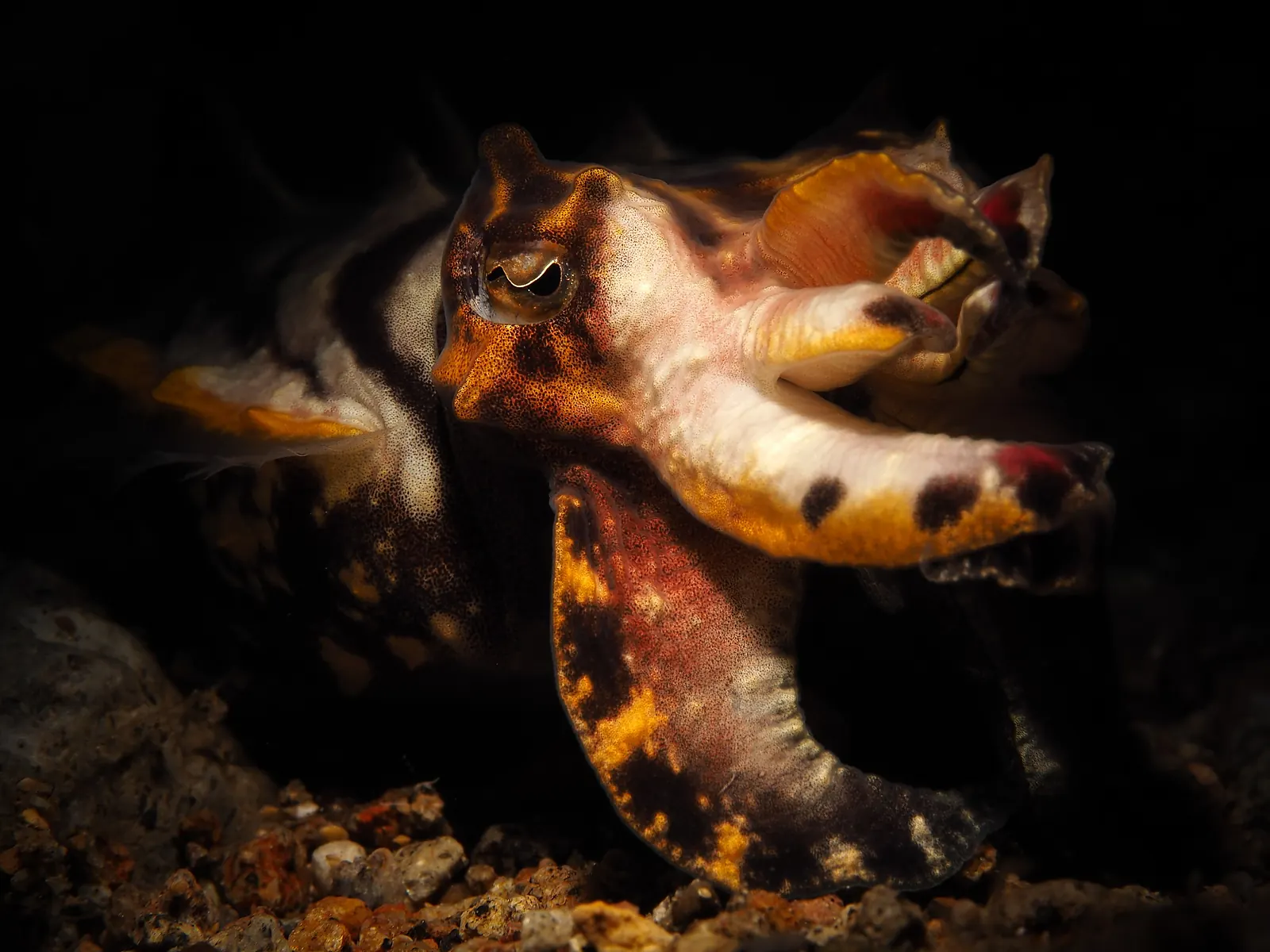
- Flamboyant cuttlefish and hummingbird bobtail squid
- Nudibranchs of every colour
- Ghost pipefish and seahorses
- Harlequin shrimp, sexy shrimp and shrimp on feather stars
- Mantis shrimp, snake eels and lizardfish
What you see changes from dive to dive, and that's part of the fun.
Sites to try
- Dauin North (House Reef): right in front of us, where the survey recorded more than 560 species
- The Pier: frogfish, octopus and nudibranchs by the old Dauin pier
- Thalatta: harlequin shrimps, ghost pipefish and bobbit worms
- Malatapay Pier: cuttlefish, octopus and frogfish at a working pier
See all the sites on our Dauin dive map.
Tips for good muck dives
- Go slowly. The best finds are tiny and well hidden, and your guide will point them out.
- Keep your buoyancy steady and your fins off the sand, so you don't stir up silt or disturb the animals.
- Look, don't touch. Never move an animal for a photo.
- Add a night dive. We run one every evening, and Dauin's sand is busy after dark.
- Photographers: bring a macro lens for Dauin and a wide-angle setup for Apo Island.
When to come
Dauin is good to dive all year. Frogfish are most common from March to June, nudibranchs from January to March, and octopus from September to November. See when to dive Dauin for the month-by-month picture.
Ready to dive? Build your dive trip, or ask us a question.